Take a trip to your local industrial complex, an oil refinery, construction site, or manufacturing floor and chances are good you’ll see at least one person wearing an MSA V-Gard helmet. It’s not by accident.
The V-Gard series has long been the helmet of choice for those with serious industrial head protection needs, but it’s been that way for decades and for reasons beyond name familiarity and brand loyalty. The aesthetics and functionality of the line, as well as testing and everyday use, shows that MSA is different from other hard hat manufacturers.
How MSA Designs with Function in Mind
While most hard hat producers check the boxes to meet minimal standards and call it a day, MSA took their V-Gard series from the starting gate with intention. The original V-Gard concept was designed in 1962. While components have changed over time from improvements in manufacturing, the idea behind it has remained somewhat constant.
For example, the shell geometry is more important than most people can imagine when it comes to impact resistance. That signature V on top? It’s not just for looks – it’s because when something strikes the impact zone of the hat, the point of the V forces pressure to slide off rather than pushing down into the minor adjustments that hold the hat away from your head. It doesn’t mean that minor adjustments will crack it – far from it – but MSA determined that this aspect would allow for better dispersion of a blow than a rounded crown, which is the typical shape competitors feature.
Even the materials selection process is one of intention. Most companies go with whatever thermoplastic is easy and inexpensive to mold. MSA has found a high density polyethylene compound that works for their more accepted V-Gard line and it’s a rare compound in that it’s impact resistant yet also temperature resistant (to withstand heat) and will hold up in severe cold without becoming brittle or blackening from exposure. It almost sounds too good to be true. No wonder people choose it over others!
Where MSA Stands Out Above Other Hard Hat Manufacturers
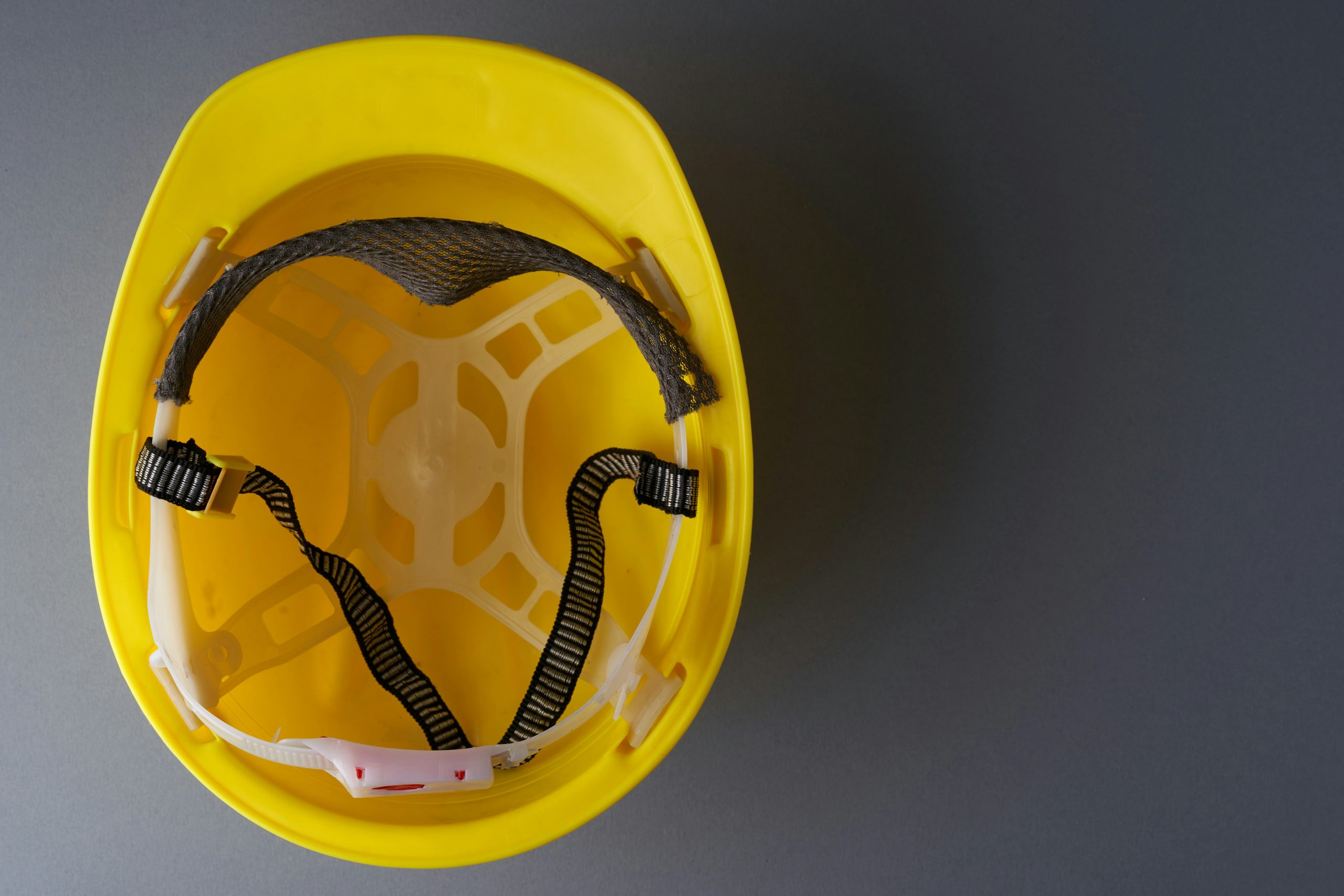
Next comes the suspension system and this is where MSA gets real. The Fas-Trac system was designed by MSA when even other manufacturers were still putting their low-grade webbing together as poorly stitched afterthoughts to make sure hard hats stayed attached to people’s heads. Fas-Trac features a ratchet adjustment system to ensure that safety managers can recommend and ensure that within seconds, anyone who wears it will have a legitimately tight fit without having to fumble with too much time re-adjusting their suspension system.
But it gets better, the Fas-Trac is integrated into the shell through reinforced attachment points that help absorb energy upon impact creating a secondary protection mechanism in addition to the shell itself. People who’ve worn standard suspensions compliment Fas-Trac systems because they’ve felt a difference in longer-than-expected wearability.
If a hard hat fits right and doesn’t shift around, people are more inclined to leave it on. This may sound like common sense, but compliance with industrial safety regulations is a huge issue – and when people forget their hard hats in their trucks because they’re uncomfortable, the accessibility meets regulatory frustrations.
Type 2 Like Never Before
With the prevalence of Type 2 classifications, MSA’s engineering makes sense as to why they’ve become such a reputable choice. Type 2 means that a helmet has undergone testing and certification review for both top impact and lateral impact protection – meaning that even hard hats in a Type 1 category (usually only assessed for top impact protection only) benefit those looking for reliable lateral impact protection like their peer operators who choose the msa hard hat because it’s proven that’s what it can withstand.
Yet without rigorous testing, no one would understand this classification between Type 2 and Type 1. MSA is compliant with ANSI Z89.1 Type 2 standards, but they go above and beyond what’s required, they test more samples, at more angles, under more environmental conditions than what’s mandated to get above average results and additional certifications – if they even need them!
Both V-Gard Cap Style and Full Brim (the two popular designs) both offer a Type 2 option which appeals to safety managers because they don’t need to make sacrifices in standards with aesthetics, cap style works well in confined spaces without a brim getting in the way while full brim provides sun/rain protection for outdoor work, and since they can be the same general design with just this small adaptable component, managers don’t need to bring new team dynamics into play with more important affairs at hand.
Real Testing Means Real Results
Testing standards let you know how they perform if a hat is dropped off at the lab for testing. It’s industrial life that complicates things; exposure to chemicals, being left in hot cars, wearing them inside heavy application, sat on or dropped onto concrete, often hard hats do not experience realities of life when properly tested.
That’s where MSA’s good name comes from, their hard hats hold up with this excessive wear and tear compared to alternatives who buckle under the strain quicker than expected. Sun exposure that cracks or browns less durable options does not happen as quickly with MSA hats. Suspension systems remain intact with repeated impacts where adjusters become loose on other manufacturers after one turn too many.
Attachment points never crack or strip out after months of use; it’s because they’re parts are made from quality components that withstand basic wear and tear like general expectations but not necessarily extreme precautions.
Safety managers’ report that with MSA V-Gard hard hats perform longer without replacement even if the environment is less than desirable; when outfitting hundreds or thousands with safety precautions, even measurably longer time for replacements result in fiscal savings, but better yet, it’s much more likely people will wear protective gear that’s still protective, operating as intended versus equipment with unreliable intentions or beaten in too badly to mean anything at all.
The Interoperability Advantage
One often overlooked nuance of popularity with V-Gard is its advanced set of attachments per helmet outside of what’s originally provided out of the box. From face shields to hearing protection to chin straps to sweatbands to winter liners – even MSA has developed products along with third-party manufacturers to create a solution for almost anything.
In environments where workers wear multiple hats throughout the workday, this modularity matters instead of hoping there are extra goggles around if someone needs additional protective gear when their primary PPE (personal protective equipment) covers another type of concern at that moment only but nothing else but time missed on the clock while they’re struggling to find someone else’s parts elsewhere.
This standardization between attachments means that clips won’t break or slots won’t strip out; when you need an attachable face shield for grinding work or need a headlamp for confined space entry, you’re not fighting flimsy attachment points or incompatible designs; it’s one easy swap that should take mere seconds instead of detracting from someone else’s productivity just because their hard hat couldn’t accommodate their needs right away.
The Price is Better but Not What People Think
First and foremost, V-Gard helmets are more expensive than budget options. Sometimes significantly so. But comparing V-Gard hard hats to alternatives misses the mark; it’s not “What’s the price?” but “What is it worth?”
A cheap hard hat might save money initially but requires replacement too soon, doesn’t offer compliance or protection and thus shows compliance rates drop significantly when hard hats are uncomfortable and left in trucks. A comprehensive cost of ownership calculation supports otherwise quality equipment, let alone potential incident costs, with MSA over other options.
Yet when serious operations for industrial safety understand this math, they’re not looking for the cheapest option; they’re looking for options best suited for effectiveness of protection meaning people will wear it consistently if they’re going to invest this much up front – or even behind, and that’s why time and time again, the V-Gard series shows up at handsomely larger job sites despite larger price tags since all companies care about first is a bottom line.
The Standard Against Which Others Are Measured
It’s not marketing push or sales openings that give MSA their foothold over industrial safety – it’s providing better helmets that perform better consistently in the conditions that matter most during real world applications. The V-Gard series has stood the test of time for sixty years as more or less refinements to an original idea that appeals to every industrial worker based on feedback from millions across industries big and small every day.
Other manufacturers make mediocre hard hats; some make good ones but none have set a standard that’s become a benchmark for what serious head protection can provide; when safety managers say “V-Gard or equivalent” there’s only so much equivalency open for interpretation – and in reality none because that’s not true since that’s how effective this series stands over time as the leader in its class.