Blog

  • Reformer Pilates Training: Complete Beginner’s Success Guide

    Reformer Pilates Training: Complete Beginner’s Success Guide

    Starting a new fitness journey can feel exciting and intimidating at the same time, especially when the equipment looks more complex than a standard gym machine. If you’ve been curious about reformer Pilates but aren’t sure where to begin, you’ll discover what to expect from training, how to build confidence, and which skills matter most as you progress.

    Understanding the learning process makes every session more rewarding, whether you want to achieve personal fitness or become a qualified instructor. With the right guidance, you’ll gain confidence while developing safe, effective movement habits that last.

    Build Strong Foundations Before Chasing Advanced Skills

    A Pilates reformer is designed to provide controlled resistance, helping you perform movements with precision rather than speed. Unlike many gym machines that isolate individual muscles, the reformer encourages your entire body to work together. That makes it an excellent tool for improving posture, stability, flexibility, and core strength.

    Resist the urge to compare yourself with experienced participants. Pilates rewards quality over quantity, and mastering basic movement patterns will make advanced exercises feel much more natural later. Small improvements in control often produce better long-term results than rushing through complicated routines.

    Find Beginner-Friendly Guidance

    Many newcomers get discouraged because they attend sessions that move too quickly and feel pressured to memorise long exercise sequences straight away. Without enough guidance, it’s easy to lose confidence or develop habits that are difficult to correct later.

    Choosing classes designed specifically for beginners makes a noticeable difference. Reformer Pilates in London, for instance, has become increasingly popular, with many studios offering introductory reformer classes that focus on technique, breathing, and safe progression instead of intensity. Smaller class sizes also give your Pilates instructor more opportunities to provide individual feedback.

    Don’t hesitate to ask questions throughout your sessions. Understanding why you’re performing a movement often leads to faster improvement than simply copying the person beside you. Good instructors welcome curiosity and adjust exercises for different fitness levels, injuries, and special populations so everyone can learn safely.

    Learn the Skills That Matter Most

    Your biggest challenge as a beginner isn’t building strength but learning how to move well. Pilates emphasises precision, breathing, and control, so each exercise teaches you how your body should feel during movement rather than encouraging repetition for its own sake.

    You’ll gradually explore different Pilates movements while becoming familiar with changing spring settings. Understanding how resistance affects each exercise helps you perform movements more smoothly and with greater confidence.

    Your instructor will also demonstrate proper body positioning, appropriate spring choices, and the importance of load awareness, allowing you to challenge yourself without sacrificing technique.

    Pay close attention to posture, breathing, and smooth transitions between exercises. These details form the foundation for every future progression. Consistent practice develops coordination, body awareness, and confidence far more effectively than trying to advance too quickly.

    Considering Instructor Training

    Comparing course content carefully is worthwhile because not every qualification follows the same structure. Some providers offer training online, while others prioritise face-to-face teaching from the beginning.

    High-quality programmes still include practical exams, ensuring graduates demonstrate safe teaching standards rather than simply passing written assessments. During training, you’ll often work on respected balanced body reformers, allowing you to become familiar with widely used exercise equipment found across the industry.

    You’ll also gain experience using other types of studio equipment commonly found in professional Pilates studios, preparing you for employment in different settings.

    Many graduates eventually teach in corporate fitness facilities, wellness centres, or public/private health clubs, where adaptable teaching skills are highly valued.

    What You’ll Learn During Instructor Education

    A strong comprehensive Pilates education program introduces the entire Pilates system rather than focusing on one machine alone. This often includes full apparatus training, giving you confidence across multiple pieces of equipment.

    You’ll usually begin with a mat module, followed by a chair module, allowing your teaching knowledge to develop progressively. Some providers also recommend holding a group exercise instructor certification before expanding your qualifications, while others package everything into a mat + full reformer instructor certification pathway.

    Alongside equipment work, you’ll practise advanced mat work, attend dedicated mat courses, and complete specialist reformer courses that steadily expand your teaching toolkit.

    Turn Knowledge Into Real Teaching Confidence

    Movement skills improve fastest through in-person training supported by regular coaching. Every session provides opportunities to apply theory in realistic situations. You’ll complete numerous practical exercises that challenge your observation and communication skills. Many aspiring instructors come from careers as personal trainers, although previous fitness experience isn’t essential for success.

    As your confidence grows, you’ll learn to assess different client abilities while performing accurate form analysis. Continued in-studio practice reinforces your teaching style and prepares you for working with a wide range of clients.

    One of your most valuable skills becomes selecting appropriate exercise modifications, ensuring everyone can participate safely regardless of fitness level, injury history, or mobility limitations.

    As your experience grows, you’ll also become better at explaining the multiple wellness benefits of reformer Pilates, from improved posture and balance to increased strength, mobility, coordination, and body awareness. Helping clients understand these long-term outcomes keeps them motivated and encourages consistent participation.

    The Future of Reformer Pilates

    The industry is expanding beyond traditional studios into workplaces, rehabilitation settings, and communities, creating opportunities for qualified instructors across a wider range of environments.

    Demand for Pilates continues to grow throughout the UK as more people look for sustainable, low-impact ways to stay active. Calls for more public investments in physical health could further support this momentum by improving access to evidence-based exercise routines and preventive wellbeing initiatives.

    Your First Step Is the Most Important

    Beginning reformer Pilates doesn’t require perfect flexibility or previous experience. It requires curiosity, patience, and a willingness to learn each movement with care.

    As you build knowledge, practise consistently, and choose quality instruction, your confidence will naturally grow alongside your skills. Every well-executed session brings you one step closer to your goal, whether it’s improved fitness, better movement, or a rewarding teaching career.

  • High-Waisted Skinny Jeans: How to Style a Flattering Denim Classic

    High-Waisted Skinny Jeans: How to Style a Flattering Denim Classic

    After several seasons dominated by looser denim silhouettes, skinny jeans are gradually returning with a more refined, modern approach. However, in 2026, we are seeing a renewed interest in high-waisted skinny jeans  and the reasons are pretty obvious! It’s one of the most flattering styles you can own, offering a structured fit that visually lengthens the silhouette.

    Choose the right fit for your body

    The very foundation of styling your high-waisted skinny jeans is to pick the right fit for your shape. As the name suggests, the jeans should follow the natural line of the silhouette , without any gaping at the back or overly loose fabric around the legs.

    But, at the same time, they should remain comfortable and not overly tight (e.g. any discomfort around the waist usually means the fit is too tight). Choosing a model that has a bit of stretch is a good idea for extra comfort, allowing the fabric to move with you, whilst maintaining its shape throughout the day.

    What Tops to Wear with High-Waisted Skinny Jeans

    High-waisted skinny jeans are practically made for tucked in tops. It’s a super simple way to define your waist and create a balanced, defined silhouette. . This works particularly beautifully with baggier shirts and blouses.

    There are a few different ways to tuck in the top. One is, of course, the full tuck, usually worn with shirts, t-shirts and tank tops. If the fabric is too thick or if you want a more relaxed look, you can also use the French tuck (tucking just the front portion of the shirt or sweater).

    Play around with proportions

    One of the greatest strengths of high-waisted skinny jeans  is how naturally it balances volume elsewhere in an outfit. For instance, oversized blazers, chunky knit jumpers and boxy leather jackets can all look chic  when paired with a slim leg, creating a stylish contrast between a relaxed upper half and a more structured lower half.

    Different footwear will also help manipulate the proportions. Boots with a heel (either knee-high or ankle-high) create a seamless visual line, elongating the legs, whereas pointed-toe flats or strappy sandals bring elegance without any added height. Trainers work nicely with skinny jeans too, lending a more relaxed and sporty feel, perfect for a casual weekend.

    Perhaps the only shoe style to approach with caution is overly chunky trainers or boots that leave a small gap between the end of the jeans and the top of the shoes. These can visually shorten the leg or create an awkward cut at the bottom.

    Dress them up

    Skinny jeans are not just great for casual wear – they can also be dressed up for special occasions! For example, swap the simple tee and trainers for a silk blouse and some high heels, and you have an evening outfit without much effort!

    Accessories can add the final touch to the look.  A stylish belt, for one, can completely transform the look, adding more structure or a pop of colour. Other accessories, like gold or silver jewellery and a structured handbag, can help bring the finishing touches.

    A must-have denim

    The high-waisted skinny jean has rightfully earnt its place in everyone’s wardrobe. Besides being incredibly flattering on lots of body shapes, it’s also one of the most versatile and easy-to-style denim cuts!

    At Salsa Jeans, you’ll find a wide selection of high-waisted skinny jeans in different washes and finishes, designed to flatter every body type while staying comfortable all day long. Whether you’re after a classic dark wash for the office or a lighter tone for everyday looks, our collection has the perfect fit waiting for you. Discover yours and start building outfits that go from desk to dinner with zero effort.


  • Best AI Video Tools in 2026 (Free and Paid)

    Best AI Video Tools in 2026 (Free and Paid)

    As of June 2026, what is observed is that AI video generator which perform text to video conversion, image animation, lip sync, editing and fast rendering are all in one package. I looked at over a dozen of these tools in terms of creator tools, marketing production and for startup content and what I found is that a few of them really do stand out in terms of reliability, output quality and practical ease of use.

    Creators are done with using separate tools for image generation, animation, voice sync, and editing. They want a single workflow which goes from idea to publish ready video in minutes.

    For the most part what is observed is that for marketers, developers, agencies and startup teams which is what we will term as the main audience the right AI video platform depends on:.

    • Speed of iteration 
    • Output consistency 
    • Ability to handle multiple content formats 

    If for what you need is a film like text to video then what you may choose goes out the window for someone making social ads or large scale branded content.

    In 2026 I will cover my full analysis of the best AI video generator programs to date. Also including what each has to offer in terms of pros, cons, pricing and which one which you’ll want to use for specific applications.


    Best AI Video Generators at a Glance

    Tool Best For Modalities Free Plan Platforms Standout Feature
    Magic Hour End-to-end creator workflows Text, image, video, lip sync, face swap Yes Web, mobile Multi-tool workflow system
    Runway Cinematic AI filmmaking Text-to-video, editing Limited Web High-end motion quality
    Pika Social-first video generation Text-to-video Yes Web Fast short-form content
    Synthesia AI avatar videos Avatar + voice Limited Web Enterprise training videos
    Luma AI Realistic motion generation Text + image video Yes Web, iOS Strong physics simulation
    Google Veo Advanced cinematic generation Text-to-video Limited rollout Cloud/Web Long-form coherence


    Magic Hour

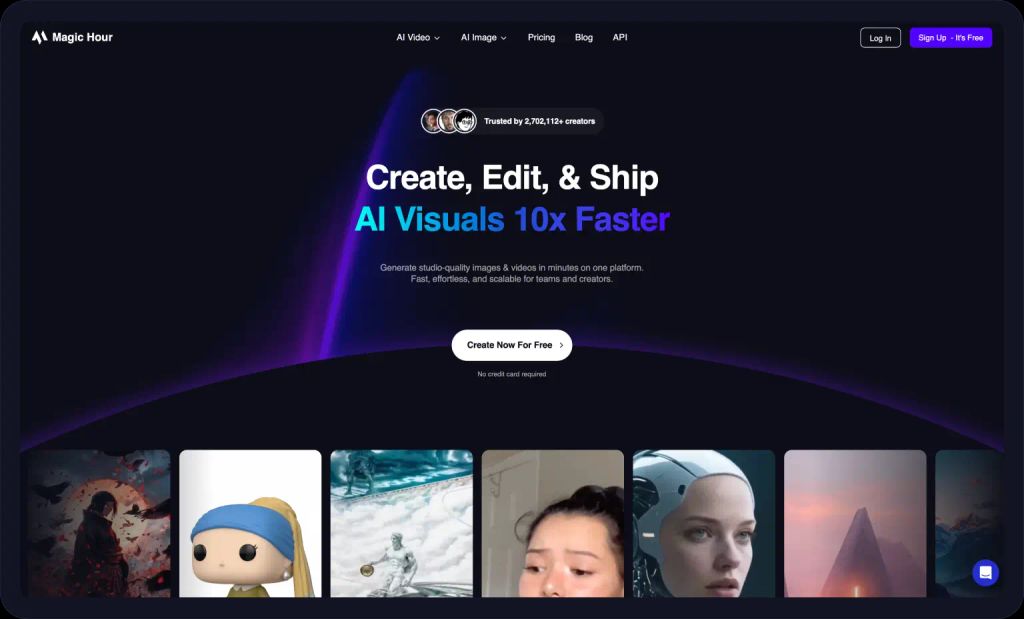
    When over a period of several weeks I tested AI video platforms I found Magic Hour to perform the best in terms of quality, speed and workflow simplicity. Instead of putting all eggs in one basket, they have included almost all of the major AI creation tools into one platform. That is a bigger issue than most people think. A great many AI video tools require users to switch between separate products for editing, animation, voice sync, and image generation. Magic Hour does that which in large part. The platform does very well for creators which produce social content, product ads, talking head videos, memes, and large scale marketing assets. At present that which includes magichour.ai is one of the best all round options.

    Key strengths

    • Excellent face swap quality 
    • Very strong lip sync accuracy 
    • No signup required for testing 
    • Credits never expire 
    • Multiple AI models inside one interface 
    • Parallel generations without hard concurrency limits 
    • Fast iteration workflows 
    • Mobile-friendly experience 
    • Frequent feature releases 

    One feature I used repeatedly during testing was the integrated image to video workflow. Instead of manually exporting assets between tools, I could generate visuals and animate them inside the same environment. The platform’s talking photo and lip sync capabilities are also among the best currently available for creators producing avatar content or localized marketing videos.


    Pros

    • Excellent all-in-one workflow 
    • Beginner-friendly interface 
    • Strong value pricing 
    • High-quality face animation 
    • Fast rendering 
    • Great for agencies and creators 
    • API parity across tools 

    Cons

    • In the realm of advanced visual design Runway is still at the top. 
    • Some releases may require many tries for precise motion. 
    • Long-form scene consistency can vary 

    My evaluation

    If in the realm of social media, marketing content, product explainers, meme creation, or large scale short form video at present Magic Hour is hard to beat. I would recommend this for start up teams as it is seen which reduces operational complexity. Instead of using four different AI tools, one may use most of the creation workflows within one single system. The integrated ai image editor also makes rapid iteration much easier when refining scenes before animation.

    Pricing

    Free plan available
    Creator: 10 annually.
    Pro: $39 per month.
    Higher enterprise tiers available


    Runway

    Runway is still at the top of the field in what is seen today of AI film production. Also it’s the model behind the growth of present AI in film.

    Motion quality is at it’s best.

    During testing Runway did very well in terms of camera movement which was very impressive, also very real looking transitions were observed and at the same time highly stylized scenes were produced that play well for commercial creative work.

    Pros

    • Excellent cinematic output 
    • Strong editing controls 
    • Professional creative workflows 
    • Good camera motion simulation 
    • Widely adopted in production teams 

    Cons

    • Higher learning curve 
    • Expensive at scale 
    • Rendering queues can slow down 
    • Less optimized for quick social workflows 

    My evaluation

    In 2026 if that is what you are into high quality filmic story telling or innovative visual production Runway is still the best choice.

    I recommend it mostly for filmmakers, agencies, and advanced creators.

    Pricing

    Limited free credits
    Paid plans start around $15–35/month
    Enterprise pricing available


    Pika

    Pika Labs broke into a strong position by way of accessibility and fast creative experimentation.

    Its simple and intuitive interface which is also optimized for short form content.

    Pros

    • Fast generations 
    • Simple interface 
    • Good for TikTok-style content 
    • Easy onboarding 
    • Frequent model improvements 

    Cons

    • Less control than Runway 
    • Scene consistency can fluctuate 
    • Limited advanced editing 

    My evaluation

    Pika does a great job for those creators that value speed over detail.

    If quick social clips, reaction content, or out of the box visuals are needed, a very practical option exists.

    Pricing

    Free tier available
    Paid plans begin around $10/month


    Synthesia

    Synthesis is the leader in AI avatar presentation.

    Unlike film generators which tend to focus on entertainment and feature films, Synthesia’s focus is in corporate communication, training videos, onboarding content and multilingual presentations.

    Pros

    • Excellent avatar library 
    • Strong enterprise support 
    • Multilingual voice options 
    • Professional templates 
    • Reliable for business use 

    Cons

    • Limited creative flexibility 
    • Not ideal for cinematic video 
    • Avatar realism still varies 

    My evaluation

    For business oriented training materials and presentations Synthesia is still the best.

    Also that which creators of dynamic social content or advanced cinematic visuals may find restrictive.

    Pricing

    Free demo available
    Paid plans start around $22/month


    Luma AI

    Luma AI blew me away with their real looking motion physics and depth.

    Its Dream Machine models present what is seen with great visual appeal and also do very well in terms of environment consistency.

    Pros

    • Excellent motion realism 
    • Strong image animation 
    • Good environmental physics 
    • Fast rendering speeds 

    Cons

    • Less workflow integration 
    • Limited editing features 
    • Results can feel unpredictable 

    My evaluation

    Luma AI has great appeal for experimental creators and visual artists.

    Its outputs are usually more rooted in reality than those of many competitors.

    Pricing

    Free access available
    Paid plans vary by generation usage


    Google Veo

    Google at magichour.ai which reviews their latest issue with the Google Veo 3.1 video generator that was analyzed in depth in which longer form scene consistency and cinematic realism are pushed much beyond what was seen from previous versions.

    According to reports from Google DeepMind, Veo puts forward realistic physics, prompt adherence, and also in extensive multi-shot sequences.

    Pros

    • Exceptional visual realism 
    • Strong prompt understanding 
    • Improved scene continuity 
    • High cinematic quality 

    Cons

    • Limited public availability 
    • Expensive infrastructure requirements 
    • Less creator-focused tooling 

    My evaluation

    Google Veo is at the forefront of where the AI video field is going in the coming years.

    For the present however many creators still see to it that they get greater value from tools like Magic Hour or Runway.

    Pricing

    Limited access
    Enterprise and cloud pricing varies

    How I Selected These AI Video Generators

    A few weeks of research were conducted on platforms for creators and startups.

    The evaluation criteria included:

    • Output quality 
    • Prompt consistency 
    • Rendering speed 
    • Ease of use 
    • Workflow integration 
    • Pricing efficiency 
    • Editing flexibility 
    • Mobile usability 
    • API availability 
    • Stability under heavy generation loads 

    The evaluation looked at which platforms did best:

    • Talking-head content 
    • Social ad generation 
    • Product demos 
    • Character animation 
    • Meme workflows 
    • Marketing asset production 

    During the tests it became apparent that:

    The best AI for video are no longer single purpose generators. They are full scale work flow platforms.

    That is a fact which contributed to Magic Hour’s high score.

    AI Video Market Trends in 2026

    The AI video field is growing very quickly. A few major trends stand out:

    Multi model ecosystems are succeeding.

    Creators are leaning towards platforms which have it all in a single interface which is generation, editing, lip sync and animation.

    Short form content rules the use of the medium.

    Today what is being seen is that commercial demand is for TikTok, Reels, YouTube Shorts, and ad creatives.

    AI characters are growing.

    Training, onboarding, and multilingual interaction are key in enterprise.

    Workflow speed is what counts over perfection.

    In practice in marketing speed out performs precision.

    Open API’s are a must.

    Developers and startups are leaning towards automation pipelines instead of stand alone creative tools.

    Final Takeaway

    In 2026 the best AI video generator will depend on your workflow.

    Go with Magic Hour for integrated creator solutions and scalable marketing production.
    Choose Runway for cinematic filmmaking
    Choose Pika for fast social content
    Choose Synthesia for enterprise avatars
    Choose Luma AI for experimental visuals
    Go with Google Veo for that frontiers of cinema experience.

    If a recommendation must be made to most creators and startup teams at present, that would be Magic Hour which also happens to provide the best of both usability and flexibility at a great value.

    The category is still in the very early stages of development.

    New releases each month and at the same time smart creators are adopting a mix of platforms instead of settling in with just one.

    FAQ

    Which is the top AI video generator in 2026?

    For the large part which goes to creators and marketers, at present Magic Hour has the best balance of usability, workflow integration, pricing and generation quality.

    Are free AI video tools worth trying?

    Yes. Some what is being seen is a large number of options for free plans which are very good indeed for testing out workflows and producing short form content.

    Which AI which is the best for film production?

    Run at present some of the best in field do Runway and Google Veo.

    Can AI produce talking avatars?

    Yes. Tools that support talking avatars, lip sync, and voice based animation are Magic Hour and Synthesia.

    Which issues are most important when it comes to choosing an AI video platform?

    Focus on what the platform does for you in terms of workflow efficiency, rendering consistency, pricing, and how it integrates into your content production pipeline.


  • Beginner’s Guide to Choosing Vape Liquid Flavours

    Beginner’s Guide to Choosing Vape Liquid Flavours

    Starting your vaping journey is an exciting step, but it can also feel a little overwhelming, especially when you’re faced with an almost endless wall of vape juice options. Fruity, minty, creamy, tobacco-flavoured…where do you even begin?

    Thankfully, with a bit of know-how, you’ll be able to narrow down your choices quickly and find flavours you’ll genuinely enjoy. This guide walks you through the key things to consider as a first-time vaper, so read on.

    Know What’s Inside Your E-Liquid

    Before diving into flavours, it helps to understand what vape juice is made of. Most e-liquids contain four core ingredients: Propylene Glycol (PG), Vegetable Glycerin (VG), flavourings, and nicotine (though nicotine-free options exist too).

    The PG/VG ratio matters more than most beginners realise. A High PG liquid produces a stronger throat hit and carries flavour very well. This is ideal if you’re coming from smoking cigarettes.

    High VG shortfills, on the other hand, produce thicker clouds and tend to have a smoother inhale. For most beginners using pod kits or vape pens, a balanced ratio or higher PG blend tends to work best.

    Understanding this foundation will save you from buying a liquid that simply doesn’t work well with your device. It’s worth checking the specs of your vape kit before making a purchase.

    Start With What You Already Know You Like

    One of the easiest ways to choose your first vape liquid flavour is to think about the tastes you already enjoy in everyday life. Are you someone who reaches for a mint after a meal? A menthol or spearmint e-liquid might feel immediately familiar and satisfying. Do you love tropical fruit juices or smoothies? Then a fruity blend could be your sweet spot.

    Many former smokers find comfort in tobacco-flavoured vape juices, at least initially, because the taste mimics what they’re used to. Over time, though, most people drift toward fruitier or sweeter profiles. There’s no rule saying you must stick with one flavour forever.

    Browsing a reputable vape UK retailer is a great starting point. Many offer a wide range of flavour categories, letting you filter by taste profile so you’re not scrolling endlessly. Shortfill e-liquids are particularly popular because they come in larger bottles and offer impressive flavour variety without breaking the bank.

    Consider Your Nicotine Strength

    Flavour is only part of the equation. Getting your nicotine strength right is just as important. And it’s something a lot of beginners overlook until they’re already frustrated.

    If you’re switching from cigarettes, nicotine salts (commonly called nic salts) are worth serious consideration. Unlike traditional freebase e-liquids, Nic Salt E-Liquids deliver nicotine more efficiently and at higher strengths without the harsh throat hit. This makes them particularly well-suited to pod kits and refillable pod systems, which are devices that typically run at lower wattages.

    Nicotine strengths for nic salts typically range from 5mg up to 20mg, which is the maximum allowed under TPD regulations in the UK. Heavier smokers will likely want to start at 20mg, while lighter smokers may find 10mg or even 5mg more than sufficient.

    Getting this wrong in either direction can lead to either cravings or dizziness, so it’s worth taking a moment to honestly assess your previous smoking habits.

    For those who prefer sub-ohm vape kits or box mods with higher cloud production, freebase e-liquids at lower nicotine strengths (3mg or 6mg) tend to be the go-to choice, since the higher volume of vapour already delivers more nicotine per puff.

    Vape

    Popular Flavour Categories to Explore

    Once you’ve got your nicotine strength sorted, the fun part of exploring flavours begins. The vaping world is remarkably creative when it comes to flavour development, and the options available today go far beyond simple fruit or tobacco.

    Fruity flavours remain the most popular category because they’re vibrant, refreshing, and widely accessible. There are berry-flavoured blends that are consistently well-regarded among new and experienced vapers alike. If you enjoy something a bit sharper, there are flavours that have a citrus tang that keeps things interesting.

    For those who prefer something cooler, mint and menthol options deliver a crisp, clean finish that pairs especially well with the throat sensation that nic salts provide. On the sweeter end, dessert and candy-inspired vape juices offer an indulgent alternative to traditional tobacco.

    There are also flavours that closely mirror the flavour profiles found in popular disposable vapes. This makes it an easy transition if you’re moving away from disposable vape flavours and stepping up to a refillable vape kit.

    Match Your Liquid to Your Device

    Not all e-liquids work well in every device, and this is a point that’s easy to miss when you’re just getting started. If you’re using a pod kit, you’ll want to use higher-PG nic salt liquids rather than thick, high-VG shortfill vape juice, which can struggle to wick properly through the smaller coils in these devices.

    Sub-ohm devices and wattage-adjustable vape kits, by contrast, are designed to handle thicker, high-VG e-liquids and shortfill e-liquids that produce bigger clouds. Using a thin, high-PG liquid in a sub-ohm tank can result in a burnt taste and shortened coil life.

    When in doubt, check the recommendation from your device’s manufacturer, or get in touch with customer support at your chosen vape shop. A good retailer will always be happy to point you in the right direction.

    Final Thoughts

    Choosing your first vape liquid flavour doesn’t need to be a stressful process. Start simple: pick a flavour category that appeals to you, get your nicotine strength right for your habits, and make sure your chosen liquid is compatible with your device. From there, it’s just a matter of exploring.

    The vaping community in the UK has access to a genuinely impressive range of vape products, and the quality and variety of e-liquids available today means there’s something out there for everyone. Give yourself permission to experiment, try a few different profiles, and enjoy the process of finding what works for you. Once you land on your favourites, you’ll wonder why you ever found it daunting in the first place.

  • Upcoming Changes Every UK Driver Needs to Know In 2026

    Upcoming Changes Every UK Driver Needs to Know In 2026

    In the UK, 2026 is shaping up to be one of the more eventful years in recent memory for motorists. From the way we prove our identity as drivers to how much we pay at the pump, a wave of changes is either already in effect or moving through the legislative pipeline fast. Whether you drive daily for work, use your vehicle for school runs, or treat it as a weekend indulgence, personalised number plates provider Regtransfers have shared a practical, plain-English guide to the most significant developments hitting UK roads this year.

    Your Driving Licence Is Going Digital

    The UK government has set a target of fully implementing digital driving licences by 2027, and the groundwork is being laid now. Physical photocard licences remain valid for the time being, but the direction of travel has now taken shape: your licence record will soon exist primarily online, accessible through the forthcoming GOV.UK Wallet app.

    That app was originally scheduled for 2025 but has not yet launched as of spring 2026. In the meantime, drivers can already view and share their licence details at gov.uk, and should ensure their DVLA records – including address and any declarable medical conditions – are fully up to date. Failing to do so can result in fines or, in serious cases, revocation of your licence.

    Crackdowns on Driving Test Bookings

    Learner drivers and their instructors will need to navigate tighter rules around test bookings, introduced to crack down on the abuse of an already overstretched system. The key changes are:

    • A minimum of 10 working days’ notice is now required to cancel or change a test booking

    • Driving instructors can no longer book tests on behalf of their students

    • Limits have been placed on how frequently a test can be rescheduled

    These measures are designed to free up slots that were previously being snapped up by bots and resold at a premium – but they do mean that genuine students need to plan further ahead than before.

    ANPR Enforcement Is Intensifying

    Automatic Number Plate Recognition (ANPR) technology is becoming an increasingly routine part of life on UK roads. In 2026, its use is being expanded specifically to catch vehicles operating without valid MOT certificates, road tax, or insurance.

    The consequences of being caught are severe: fixed penalty fines, potential court proceedings, vehicle seizure and the invalidation of motor insurance, even if you believed you had cover. Drivers can check their MOT status and road tax validity quickly and for free via the government’s own website.

    Fuel Is About to Cost More

    The 5p-per-litre fuel duty reduction that has been in place since 2022 is coming to an end. The cut will be phased out from September 2026, with full inflation-linked rises planned from April 2027.

    The headline rate on standard petrol and diesel has been frozen since 2011–12, sitting at 52.95 pence per litre. The removal of the 5p reduction will be felt most acutely by high-mileage drivers – those doing significant annual mileage for work or long commutes should factor this into their running cost calculations now.

    Road Tax Rates Have Risen (Including for Electric Vehicles)

    Vehicle Excise Duty (VED) – what most people call road tax – increased to £195 for the 2025/26 tax year, based on movements in the Retail Price Index. Notably, electric vehicles are now included in this standard rate, following the end of their previous exemption.

    It is worth remembering that only the first year of VED is emissions-linked; subsequent years revert to a flat rate regardless of how green your vehicle is.

    Company Car Drivers Face Higher Tax Bills

    If you receive a company car as part of your remuneration package, benefit-in-kind (BIK) tax rates are changing. Electric company cars will see their BIK rate increase from 3% to 4%, while high-emission vehicles could face rates as high as 37%. Those running older, less efficient fleet vehicles may find the financial case for switching to electric strengthened considerably by this shift.

    Motability Scheme Changes Affect Disabled Drivers

    From July 2026, the Motability scheme – which helps people with disabilities lease vehicles – will be subject to new costs. VAT will become payable on Advance Payments, and Insurance Premium Tax will be added to certain leases. Some higher-value vehicles are being removed from the scheme entirely.

    Wheelchair Accessible Vehicles (WAVs) will remain exempt from the VAT and insurance changes. Those currently on the scheme, or considering joining, are advised to check the latest information on the Motability and government websites ahead of July.

    The London Congestion Charge Has Jumped by 20%

    Drivers in the capital are now paying £18 per day for the standard congestion charge – a 20% increase from January 2026. For those driving electric vehicles registered on Auto Pay, a discount applies until March 2030: electric cars pay £13.50 per day, and electric vans or HGVs pay £9 per day.

    The charge operates Monday to Friday from 7am to 6pm, and on weekends and bank holidays from noon to 6pm. The zone is enforced by ANPR cameras and marked by the familiar red ‘C’ signs. Late payment incurs an additional £21 charge.

    Road Safety Rules Are Getting Tougher

    The government’s updated Road Safety Strategy, published in January 2026, signals several significant changes currently in consultation:

    Seat belts and penalty points: The proposal would add three penalty points to the licences of drivers – or passengers – caught without a seat belt. This would be on top of existing fines. The same points would apply to drivers who fail to ensure children in the vehicle are properly restrained.

    Drink and drug driving: The permitted blood alcohol level for drivers is proposed to be reduced, and police would gain the power to seize vehicles from anyone arrested for drink or drug driving.

    Eyesight tests for older drivers: Drivers aged 70 and over already renew their licences every three years, but currently rely on self-declaration to confirm adequate vision. A new consultation proposes replacing this with mandatory eyesight tests. Drivers found to have seriously impaired vision would not have their licence renewed.

    Stay Ahead of the Changes

    The pace of change in UK motoring policy is accelerating. Whether it is digital IDs, new enforcement technology, or shifting tax structures, the drivers who stay informed are the ones best placed to adapt without financial or legal surprise.

  • Where to Buy Affordable High-Tech Wellness Gadgets to Elevate Your Daily Health Routine

    Where to Buy Affordable High-Tech Wellness Gadgets to Elevate Your Daily Health Routine

    In this fast-moving age, it is seen that one who lives a healthy life is of great importance. Also, it is fortunate to see that technology has grown to support better health. What was once a luxury in the form of high-tech wellness gadgets is now very much a part of the average person’s life and at much more affordable prices. From smart wearables to AI health devices that integrate into day-to-day routines, a large adoption of these tools is seen, which also happen to be more budget-friendly.

    If you’re looking for a reliable place to explore budget-friendly options, platforms like Voghion UK presents a large choice of innovative wellness products that fit into many different lifestyles and budgets. If a person is a sports enthusiast or just looking to improve health in general, choosing the right store is key.

    Voghion UK, which is their curation of health gadgets that have a great balance of function and value. As the demand for smart wellness solutions grows, so does the online presence of companies, which in turn is bringing to light quality products at great prices.

    Why do high-tech wellness gadgets work?

    Modern wellness tech has gone past basic tracking; it has action-oriented reports. It is seen in devices like fitness bands, smart scales, posture correctors, and sleep trackers, which help users to better know their bodies. These tools report on heart rate, sleep phases, hydration levels, and also stress trends.

    Into the routine these gadgets can be included, which do the following:.

    • Monitor daily activity levels
    • Improve sleep quality
    • Stay consistent with fitness goals
    • Detect early signs of health issues

    The fact is that many of these options have become more affordable, which in turn has increased their appeal to a wider audience.

    Top Affordable Wellness Gadgets to Consider

    1. Smart Fitness Trackers

    Fitness wearables are at the top of the wellness gadget list. They track steps, calories burned, heart rate, and also oxygen levels. Also, budget models, which once played catch-up to the premium ones, now feature what was once exclusive to the high-end models.

    2. Smart Water Bottles

    Hydration is key for health. Also available are smart water bottles, which will remind users to drink water all day and which also report back via mobile apps.

    3. Posture Correctors with Sensors

    As more people are working from home, posture issues are seeing a rise. Smart posture correctors, which gently alert users when they slouch, are a solution that is seen more of.

    4. Sleep Tracking Devices

    Quality sleep is a basis for good health of mind and body. Sleep trackers study sleep patterns and put forth tips to improve them.

    5. Portable Massagers

    Affordable electric massagers that will help out with muscle tension after long days. Also, there are many compact models for home and travel.

    Where to Buy Affordable Wellness Gadgets

    Finding out what stores to buy these gadgets from may have a great impact on price and quality. Here are some of the best options:.

    Online Marketplaces

    E-commerce is the place to go for tech deals. It is seen to have a great choice of products, user reviews, and very competitive prices. Sites like Voghion UK which focus on trendier, more affordable gadgets, are great for the health-conscious shopper.

    Brand Websites

    Some brands go direct to consumer, which in turn may provide what is considered exclusive deals and packages but which at other times may command a higher price than that of marketplaces.

    Tech Retailers

    Retail stores and online tech retailers also sell wellness gadgets. They do tend to be reliable but at times don’t have the best prices.

    Comparison Platforms

    Websites like TechRadar report on the latest wellness tech products, which are also used for in-depth reviews and comparisons at the site.

    How to Choose the Right Gadget

    Between many choices it can be hard to choose the right device. Here are some tips to help out:.

    • Define Your Goals
      Is the goal to drop some pounds, sleep better, or ease stress out of life? Choose products that fit what is being tried to achieve health-wise.

    • Check Compatibility
      Make sure that the device is what is needed for easy integration.

    • Read Reviews
      Customer feedback gives an in-depth look at product performance and durability.

    • Compare Features
      Don’t base the decision on price alone; look at the features also, which will give the best value for money.

    Benefits of Buying Wellness Gadgets Online

    Shopping online offers several advantages: Online shopping provides many benefits:.

    • Convenience: Shop right from the comfort of home.

    • Variety: Access to a larger variety of products than physical stores.

    • Better Pricing: Take advantage of sales.

    • User Feedback: Check out what other customers have to say first.

    Online it is seen the platform’s inventory is updated with what is at the forefront of technology, which in turn puts users at the front of health and wellness.

    The Future of Affordable Wellness Tech

    The wellness tech field is growing very fast. It is seen in this space, the introduction of advanced AI and wearables, which in turn is making devices more intelligent and personal. There are real-time health update features, prediction analysis, and app integration, which is now the norm even in economic devices.

    As it is seen there is more competition in the market, prices of high-tech wellness products are going down, which in turn is making these tools available to all. This also is a trend that empowers individuals to take control of their health like never before.

    Final Thoughts

    Investing in affordable tech for health is a great step toward improving daily health routines. With the right tools, users can track progress, stay motivated, and make informed decisions about well-being.

    Platforms, which are Voghion UK, include in their wide range of products economically oriented health items. Also, they do research, which is in association with TechRadar, to bring choices that are right for budget and needs.


  • A Basic Guide to Designing Themed Restaurants and Bars

    A Basic Guide to Designing Themed Restaurants and Bars

    Themed restaurants have to walk a fairly tight line to remain immersive, without falling into the realm of overt kitschiness. People want to experience something focused and entertaining, without necessarily feeling as if they’re participating in a tacky gimmick. Owners and operators can charge a premium for a great night out, as long as they create a coherent narrative that makes sense, rather than feeling distracting. 

    The best themed restaurants London and the rest of the country have to offer are based around sensible concepts, authentic materials, bespoke furniture and more. This article will explain the basics of how a theme can work to an eatery’s advantage. 


    Define your narrative

    Your theme restaurant should tell some sort of story. You can go for something more comprehensive, complete with a distinct, fictionalised story. Or, you can go for something looser and ingrained in a more personal or family history. 

    • Consider why the place exists and explore it in your design
    • Sensory elements like smells, sounds and textural feelings
    • Do not creep between themes that seem similar (e.g. Italian and Greek decorations)

    It doesn’t matter if you’re going for something simpler or more ambitious; the theme has to feel consistent and make sense. 


    Prioritise authentic materials

    The best themed venues bring in bespoke contract restaurant furniture and decorations that utilise relevant materials to their narratives. It’s important to choose pieces with details that guests will notice and enjoy throughout their visit. Elements such as real leather, heavy brass and cold stone table tops will help to ground the escapist experience in reality, especially in tactile areas. 

    • Fixed banquette seating can help to increase the sense of immersion
    • Bespoke detailing is a great way to enhance the efficacy of furniture
    • Custom pieces can achieve period style with modern performance materials

    Investing in these detailed elements will help to make your space more memorable than the competition. 


    How to use lighting effectively as a narrative tool 

    The themes of restaurants need to be lit effectively, or all the other elements can’t be truly seen as the best possible representation of themselves. 

    • Lighting should be layered with task, ambient and accent lighting to ensure every aspect of the venue shines for what it is. 
    • Certain themes, such as Noir or Nautical, benefit from shadow play, with less-lit areas having impressive effects.
    • Smart LED lighting can be used to shift mood throughout the night, perfect if there’s a musical or performance element to the restaurant. 

    Don’t subjugate lighting as a utilitarian tool; make it an integral part of the storytelling. 


    Making storytelling comprehensive in themed restaurants

    Whatever the direction that you’ve chosen for your themed restaurant, it’s essential for the experience to feel consistent from the minute your guests walk in until the second they walk out the door. If they get a peek behind the curtain, the theme falls apart. 


    • Make modern infrastructure, such as POS terminals, fire extinguishers and speakers, discreet. 
    • Design the menu in line with the rest of the branding, and keep that typeface across various elements. 
    • Keep the interior design elements in mind across the bathroom design, as this is where a lot of ‘Instagramming’ gets done.
    • Ensure that the service staff stay on theme, with elements like costumes, customer interactions and any tableside theatrical dishes/drinks.


    Investing in details like these will ensure your guests feel more thoroughly immersed in the theme that you’ve curated for them. Whatever direction you choose to go in across the different types of themed dining experiences, a consistent narrative, authentic materials and furniture as well as smart lighting features will result in a quality time for your guests. 


  • The Freedom of the Steppe: Why Car Rental is the Ultimate Game Changer for Your Kazakhstan Trip

    The Freedom of the Steppe: Why Car Rental is the Ultimate Game Changer for Your Kazakhstan Trip

    Kazakhstan is a land of impossible scales. As the ninth-largest country in the world, its beauty is not concentrated in single city blocks, but scattered across vast distances—from the turquoise alpine heights of the Tian Shan to the subterranean mosques of the western deserts. For the modern traveler, the traditional constraints of group tours and rigid train schedules often clash with the desire for authentic discovery.

    In 2026, the shift toward “slow travel” and personal autonomy has made one thing clear: to truly see Kazakhstan, you need to be in the driver’s seat. Here is why opting for a private vehicle is the most convenient, efficient, and rewarding way to navigate this Central Asian giant.


    1. Breaking the “Public Transport Barrier”

    While Kazakhstan’s rail network is legendary for its nostalgic Soviet-era charm, it is designed to connect major industrial hubs, not natural wonders. Many of the country’s most iconic “bucket list” locations—such as Lake Kaindy with its sunken spruce trees or the jagged “Valley of Castles” in Charyn Canyon are located hours away from the nearest train station.

    Charyn Canyon

    Relying on “marshrutkas” (shared minibuses) often involves long wait times, multiple transfers, and a lack of air conditioning. By choosing to renting a car in kazakhstan you bypass these logistical hurdles. You gain the ability to depart at sunrise, beat the tour buses to the scenic viewpoints, and stay long after the crowds have left to capture the perfect golden hour photograph.

    2. Tailored Comfort for Diverse Climates

    Kazakhstan’s weather is notoriously continental. On a single trip, you might experience the humid warmth of Almaty, the biting winds of the northern steppes, and the dry heat of the Caspian depression.

    A rental car provides a controlled environment. You have the space to store essential gear—heavy jackets for the mountains, plenty of water for the desert, and camping equipment for the national parks—without the burden of hauling it through crowded stations. Modern rental fleets in cities like Astana and Almaty offer vehicles equipped with high-performance climate control and GPS, ensuring that the journey between destinations is as comfortable as the stay itself.

    Almaty


    3. Cost-Efficiency for Groups and Families

    While solo travelers might initially look at taxi prices, the math quickly shifts when traveling as a pair or a family. Long-distance taxis (known as “intercity” cars) can be expensive and offer little flexibility for stops.

    When you calculate the cost of multiple individual tickets for trains, buses, and local excursions, a rental car often emerges as the more economical choice. It essentially serves as your private transport, luggage storage, and mobile basecamp all in one. Furthermore, it allows you to choose accommodation slightly outside the expensive city centers, as “location” becomes irrelevant when you have your own wheels.


    4. Spontaneity: The Heart of the Kazakh Experience

    The most memorable moments in Kazakhstan often happen “in between.” It’s the roadside yurt where a nomadic family invites you for shubat (camel milk), the sudden view of a wild camel herd crossing the horizon, or an unmarked dirt path that leads to a hidden canyon.

    Fixed itineraries kill this spontaneity. With a rental car, a “quick photo stop” can turn into a two-hour exploration of a local village or a detour to a remote waterfall. This level of immersion is what separates a tourist from a traveler.

    5. Safety and Privacy in a Post-Digital World

    In an age where privacy and health-conscious travel are prioritized, a rental car offers a personal sanctuary. You control who you travel with and the cleanliness of your environment. Additionally, having a vehicle provides an extra layer of safety in remote areas; it is your “escape pod” and your shelter should the weather turn or should you need to reach a town quickly for supplies.


    Essential Tips for the Kazakh Road

    To ensure your experience is as smooth as the new Western Europe-Western China highway, keep these practicalities in mind:

    • Choose the Right Tool: If you are sticking to the Almaty-Astana-Shymkent triangle, a standard sedan is fine. However, if your heart is set on the “singing dunes” of Altyn-Emel or the rugged Mangystau, a 4WD (4×4) is non-negotiable.

    • Fuel Strategy: Major petrol stations like Qazaq Oil or Helios are reliable. In remote areas, the “half-tank rule” applies: if you see a station and you are at half a tank, fill up.

    • Navigation: While Google Maps works in cities, download 2GIS or Yandex Maps for more accurate local data and offline capabilities in the mountains.

    Conclusion: The Road is Calling

    Kazakhstan is not a country you simply “visit”; it is a country you navigate. The convenience of a car rental isn’t just about getting from Point A to Point B—it’s about the hundreds of miles of soul-stirring scenery that lie in between. It is the key to unlocking the true spirit of the steppe, giving you the freedom to chase the horizon on your own terms.

    On your next trip, don’t just follow the beaten path. Take the wheel, set your own pace, and let the vastness of Kazakhstan unfold before you.


  • Why Some People Lose Weight Faster on Mounjaro Than Wegovy

    Why Some People Lose Weight Faster on Mounjaro Than Wegovy

    Why do some people experience faster Mounjaro weight loss? Here, we’ll explore why this is and which medication could be right for you. 

    For people trying to lose weight, GLP-1 medications such as Mounjaro and Wegovy are increasingly being considered.

    But while these names are sometimes both used interchangeably, there are differences between them. One notable difference is that some people appear to experience faster Mounjaro weight loss in clinical trials.

    Here, we’ll examine why this might be, as well as some other factors that may affect weight loss results.


    How Mounjaro and Wegovy work

    Mounjaro, which contains the active ingredient tirzepatide, and Wegovy, which contains semaglutide, are both used to help people with obesity and related chronic health conditions lose weight. They belong to a class of medications known as GLP-1 receptor agonists, meaning that they mimic the hormone GLP-1. 

    GLP-1 is produced by the gut after we eat, and it helps control appetite, promote appetite suppression, slow digestion, and reduce food noise, sending signals to the brain that the body feels full. As a result, people on these medications tend to eat less, and this helps them lose weight. They’re both self-administered weekly as injections. 

    The main difference that sets these medications apart, however, is that Mounjaro is a dual agonist. It activates receptors for the hormone GIP, or glucose-dependent insulinotropic polypeptide, too. 


    Why some people lose weight faster on Mounjaro

    GIP works alongside GLP-1 by changing how some of the fat in the body is stored and possibly helping boost metabolism, too – meaning that the body burns more calories at rest. As a result, research has shown that Mounjaro may be more effective than Wegovy at higher doses.

    In a head-to-head trial between Mounjaro and Wegovy, with the results published in 2025, 751 people with obesity – but without type 2 diabetes – took part. They had an average weight of 113 kilograms (nearly 18 stone), while some had related health conditions, including high blood pressure and high cholesterol. Patients took the maximum amount of either tirzepatide or semaglutide that they could tolerate for around a year and a half. 

    It was found that those on tirzepatide lost 20.2% of their body weight, while those on semaglutide lost 13.7%. Meanwhile, those on tirzepatide saw their waist sizes shrink by over 5cm (about 2 inches) more on average. 


    What other factors affect weight loss? 

    While some people do lose weight faster on Mounjaro, everybody is different, and your GLP-1 medication is just one piece of the weight-loss puzzle. There are lifestyle factors to consider, including your diet, exercise levels, sleep patterns, and even stress levels, as these can influence calorie intake, expenditure, metabolism, and appetite. 

    Everyone has a different metabolism and hormone profile, so we can all respond to medications differently. Some people might notice more sudden changes, while for others, they could be more gradual. 

    So, it’s important to keep the bigger picture in mind. Whether someone uses Mounjaro or Wegovy, the medication is still just one aspect of a wider approach to weight-loss that also involves personalised support, guidance and sensible, healthy lifestyle habits. 


    Is Mounjaro or Wegovy right for me? 

    If you’re considering using a GLP-1, it’s only natural to be weighing up the two options. Both medications are approved for weight loss in the UK, and both are shown to be effective in clinical trials, but as they aren’t identical, the right option for you will depend on your own circumstances.

    While Mounjaro may be more effective than Wegovy at higher doses, this doesn’t mean that Mounjaro will be the right choice for everyone by default. Mounjaro can sometimes be more expensive depending on the provider. Meanwhile, Mounjaro is also approved for use to treat type 2 diabetes, while Wegovy is approved to help reduce cardiovascular risk in some patients. 

    If you’re concerned about side effects, the study from 2025 found that there wasn’t much difference in rates. Between 77% and 79% of people reported at least one side effect, and around 6% of people taking tirzepatide and 8% of those taking semaglutide stopped before the end of the study due to side effects.

    If you’re not sure which could be the right medication for you, speaking with experts, like those at The Virtual Slimming Clinic, could help you come to a decision you’re comfortable with. 


    Frequently asked questions


    Why do some people experience faster Mounjaro weight loss?

    Mounjaro activates both GLP-1 and GIP receptors, whereas Wegovy only activates the former. GIP helps change how some of the fat in the body is stored, and may help boost metabolism too, meaning that Mounjaro can be more effective at higher doses than Wegovy. 


    Do Mounjaro and Wegovy work in the same way?

    Both Mounjaro and Wegovy target GLP-1 receptors, helping promote appetite suppression and slow digestion, but Mounjaro is slightly different in that it also activates GIP receptors. This dual mechanism means that some people experience greater, or faster, weight loss on Mounjaro.


    How long does it take to see weight loss results on Mounjaro?

    Everybody is different, but often people notice changes in appetite in the first couple of months. Generally, weight loss will occur gradually over several months, but some people will notice faster weight loss than others.


  • The appeal of cities that offer more than nightlife when traveling

    The appeal of cities that offer more than nightlife when traveling

    The temptation is to chase destinations known purely for nightlife, places that promise endless clubs, cheap drinks and little else. At first glance, it sounds ideal. In practice, many travellers end up feeling that something is missing. Days blur together, memories revolve around the same bars, and the city itself becomes little more than a backdrop.

    More and more travellers are starting to look for cities that feel alive beyond the evening hours. Places where culture, history, food and local character matter just as much as the night scene. This shift is especially noticeable when planning group trips with a clear purpose, such as a pre wedding celebration. The challenge is finding a destination that balances fun with substance, energy with authenticity, and spontaneity with meaning.

    When nightlife alone is not enough

    Nightlife driven travel often follows a predictable pattern. Arrive, drop bags, head straight to the bars. The next day is spent recovering, with little motivation to explore beyond the hotel or apartment. By the third night, venues start to feel interchangeable, and the city loses its distinct identity.

    This approach can be particularly limiting for group trips. Different personalities within the group want different things. Some enjoy late nights, others prefer daytime experiences, and most appreciate a mix. When a destination offers little outside its nightlife, compromise becomes harder, and the trip risks revolving around a single rhythm that does not suit everyone.

    Cities with depth solve this problem naturally. They provide options without forcing choices. A morning coffee in a neighbourhood café can turn into a walk through historic streets. An afternoon activity can bring the group together before the evening begins. The nightlife becomes an extension of the experience, not the only reason for being there.

    What travellers increasingly value is context. Knowing where you are, understanding a bit of local culture, and feeling connected to the place. These elements create stories that last longer than a list of clubs visited.

    Culture, contrast and the pleasure of discovery

    Cities that offer more than nightlife tend to reward curiosity. They are places where contrasts exist side by side. Old and new, relaxed and intense, familiar and surprising. This mix allows visitors to shape their own experience rather than follow a pre written script.

    Exploring during the day adds layers to a trip. Architecture tells stories about the past. Markets and food scenes reveal everyday life. Parks and public spaces offer moments to slow down and reset. These experiences change how the city feels once night falls. Streets walked in daylight feel different after dark, and venues gain character when you understand their surroundings.

    Another advantage is flexibility. When plans change, as they often do with groups, cities with varied offerings adapt easily. A cancelled reservation can turn into a spontaneous food crawl. A slow morning can become a guided tour or a casual wander. The destination supports the mood of the group instead of dictating it.

    This kind of travel suits people who want memories that feel personal. Not just photos under neon lights, but moments of laughter in unexpected places. A conversation with a local. A view that catches everyone off guard. These are the details that elevate a trip from entertaining to meaningful.

    Why Bucharest fits the modern celebration mindset

    In recent years, Bucharest has quietly become one of those cities that delivers far more than first impressions suggest. Often underestimated, it blends a lively social scene with history, creativity and a strong sense of place. For groups looking to celebrate without sacrificing substance, this balance matters.

    The city offers a diverse daytime experience. Wide boulevards sit alongside narrow streets filled with character. Cafés and restaurants range from traditional to contemporary, often within the same block. Cultural sites are accessible without feeling overwhelming, making exploration feel casual rather than touristic.

    What sets Bucharest apart is how naturally it accommodates group dynamics. There is room for shared activities that bring everyone together, as well as space for individuals to branch off and regroup later. This flexibility makes it especially appealing for those planning a Bucharest Bachelor Party, where expectations often include both memorable nights and quality time as a group.

    Evenings in the city feel earned rather than forced. After a day spent exploring, the nightlife becomes part of a broader narrative. Bars and clubs reflect the local personality instead of copying trends from elsewhere. Music, atmosphere and crowd mix in a way that feels organic, not manufactured for visitors alone.

    Importantly, the city allows celebration without disconnecting from reality. Prices remain reasonable, but the experience does not feel cheap. Hospitality is warm, and the pace encourages enjoyment rather than excess. This combination helps groups stay present and engaged, rather than rushing from one venue to another.

    A destination that respects both fun and meaning

    Travel choices often reflect changing priorities. Many people still want fun, but not at the cost of depth. They want destinations that respect their time, energy and curiosity. Cities that offer more than nightlife answer this need by creating space for genuine connection, both within the group and with the place itself.

    Choosing such a destination shifts the tone of the entire trip. It becomes less about ticking boxes and more about shared moments. Conversations last longer. Laughter comes easier. The city contributes to the experience instead of competing with it.

    For those planning a celebration with friends, this approach feels especially relevant. A well chosen city can enhance relationships rather than distract from them. It offers stories that everyone can relate to, regardless of how late they stay out or how early they wake up.

    If you are drawn to the idea of travel that balances energy with authenticity, consider destinations that surprise you. Cities that invite exploration as much as celebration tend to leave a lasting impression. Bucharest is one of those places, quietly proving that the best trips are often the ones that offer more than expected.


  • Your Home, Your Rules: Personalising Your Disability Support Environment

    Your Home, Your Rules: Personalising Your Disability Support Environment

    Your home should reflect how you live, move, rest, and feel safe. For people receiving disability support, the environment shapes independence, confidence, and daily routines. A personalised space can help you manage a health condition more easily, maintain privacy, and stay connected to the people and activities that matter most.

    A well-designed environment considers physical needs, emotional well-being, and practical routines. Some people require adjustments for a long-term health condition or sensory impairment, while others may want changes that make daily living smoother and less stressful.

    Personalising your space starts with understanding what works for you and adapting the environment so it supports your choices, habits, and goals.

    Assess Your Needs and Set Clear Priorities

    Every personalised environment begins with honest reflection. Consider how your health condition affects movement, rest, focus, or communication. Needs assessments carried out by professionals can help identify areas where additional disability support might improve safety and independence.

    Ideally, you can work with an aged care disability service and discuss how your living space currently supports you and where improvements might help. Some people benefit from changes that reduce fatigue, while others require support options that address mental ill health or the emotional impact of long-term conditions.

    You might notice that certain areas of the home create unnecessary barriers. A narrow hallway, poor lighting, or inaccessible storage can make daily routines more difficult. Writing down challenges you face throughout the day can help shape a practical plan.

    Adapt Your Space to Improve Comfort and Safety

    Thoughtful home adaptations can transform how you use your living space. Start with simple adjustments before considering major structural changes. Rearranging furniture, improving lighting, or adding supportive seating can reduce strain and increase confidence.

    For people with physical impairment or visual impairment, clear walkways and consistent layouts help prevent accidents. If hearing impairments are part of your experience, visual alerts or vibration devices can support communication and safety. Those living with a learning disability may benefit from labelled storage areas, colour coding, or predictable room layouts that encourage independence.

    Reasonable adjustments don’t have to feel clinical. Choose textures, colours, and furnishings that reflect your personality while still supporting care and support needs. Assistive technology can help manage daily living tasks, from reminders to automated lighting or communication tools. When these systems blend naturally into your environment, the home feels less like a care setting and more like a personal sanctuary.

    Create Routines That Support Daily Living

    Personalising your environment also involves shaping routines that align with your lifestyle. A structured layout can help maintain consistency, especially if you’re managing chronic diseases or a long-term health condition.

    Consider how different areas of the home support different activities. A quiet corner might help manage mental ill health by offering space for rest or reflection. A well-organised kitchen can make meal preparation easier and safer. Daily living routines often become smoother when items are stored at accessible heights or grouped by activity.

    Support people, including a family member or professional carers, may assist with personal support or practical help. Creating shared routines ensures everyone understands how the environment works. For example, clear labelling or colour coding can help during hospital discharge, when routines might need to be adjusted quickly to new circumstances.

    Use Technology to Enhance Independence

    Technology can expand independence without overwhelming the space. Assistive technology includes tools that help with communication, mobility, or reminders. These systems can reduce reliance on constant supervision and allow you to manage tasks at your own pace.

    Voice-activated devices, reminder apps, or support by videophone may improve communication for people with sensory impairment. Some individuals use accessible vehicle technology to maintain community access, while others rely on devices that help with medication schedules or emergency contact alerts.

    It’s helpful to choose technology that matches your routine rather than adding complexity. Start with one or two tools and assess how they fit into your day. If a device feels intrusive or confusing, it might not suit your needs. The goal is to create a balanced environment where technology supports independence without dominating the living space.

    Build Emotional Connection and Reduce Isolation

    A personalised environment should nurture emotional wellbeing as much as physical safety. Loneliness and isolation can increase when a space feels restrictive or impersonal. Adding meaningful items, favourite colours, or creative outlets can help strengthen your connection to the home.

    Peer support groups, social services, and community programmes may offer ideas for creating welcoming environments that reflect personal identity. People managing mental ill health or a learning disability often benefit from familiar surroundings that reduce stress and support routine.

    Consider how visitors and carers interact within the space. Comfortable seating, accessible entryways, and clear communication areas make it easier to stay socially connected. Even small changes, such as a well-lit seating area for conversations or hobbies, can help maintain emotional balance and encourage regular interaction.

    Review and Adjust as Your Needs Change

    Personalisation isn’t a one-time project. Your environment should evolve alongside changes in health, lifestyle, or transition into adulthood. Regular reviews help ensure your space remains practical and supportive.

    Changes in a long-term health condition, mental capacity, or mobility may require new reasonable adjustments. Scheduling periodic needs assessments or informal reviews with carers helps identify areas that no longer work effectively.

    Keep communication open with professionals and support people involved in your care and support. Reporting abuse or safety concerns promptly ensures the environment remains respectful and secure. Reviewing routines, technology, and home adaptations can prevent small challenges from becoming larger barriers over time.

    Takeaway

    Personalising your disability support environment gives you greater control over how you live each day. By assessing your needs, adapting your space, and using the right tools, you can create a home that supports independence, comfort, and emotional well-being. Thoughtful planning, regular reviews, and access to practical support ensure your environment grows with you, helping you maintain confidence and stability while managing changing health and lifestyle needs.

  • 5 ways a gas chainsaw can actually save money

    5 ways a gas chainsaw can actually save money

    A gas chainsaw can do more than cut wood; it can also save money in practical ways that make home maintenance more affordable. It helps reduce costs tied to heating, tree care, and yard upkeep. Understanding how to use a gas chainsaw effectively can cut expenses that often pile up from professional services or recurring purchases.

    This article explains how the smart use of a gas chainsaw supports cost savings without sacrificing performance. It focuses on simple, cost-effective habits, from handling routine pruning work to selecting models that use less fuel and last longer.


    Cut firewood yourself to save on heating costs

    Cutting your own firewood can lower heating costs each winter. Store-bought firewood or pellets often add up over a cold season, while wood from local trees can cost far less. A small investment in the right equipment quickly pays for itself through reduced fuel expenses.

    Many homeowners find that lightweight 12 inch gas chainsaws make the process faster and simpler. Their compact size allows easier handling in tight spaces and reduces fatigue during longer tasks. This convenience encourages more consistent cutting, keeping a steady supply of wood available throughout the season.

    In addition, people gain control over their own heating supply. They choose the type of wood, how long it dries, and the size of each log. Properly seasoned firewood burns cleaner and hotter, which improves home heating efficiency and stretches each dollar spent on fuel.


    Perform regular tree pruning to avoid expensive professional services

    Regular tree pruning keeps yard maintenance costs lower over time. By removing weak or overgrown branches early, homeowners prevent major issues that might later require costly professional help. It also helps trees stay healthy and balanced, which reduces the risk of storm damage or decay.

    A gas chainsaw makes this task faster and more efficient. It cuts thick limbs cleanly, allowing better control and precision. This helps avoid the need for outside labor or specialized equipment that can add up in fees.

    Routine pruning also supports steady tree growth. It prevents branches from reaching power lines or roofs, which often leads to expensive service calls. With consistent care, trees look better and stay strong without constant professional attention.

    Taking time for regular upkeep protects both the landscape and the wallet. As a result, homeowners maintain safer and healthier trees while keeping maintenance costs reasonable year after year.

    Use a lightweight gas chainsaw like the Husqvarna 120 Mark II for efficient yard work

    A lightweight gas chainsaw helps reduce fatigue and saves time on outdoor projects. The Husqvarna 120 Mark II weighs around 10 pounds, so users can handle it easily during trimming or cutting sessions. Its small frame still delivers solid performance for yard maintenance.

    This model uses a 38.2cc engine that provides consistent power without heavy fuel use. As a result, it cuts through small trees, firewood, and fallen branches with less effort. The saw’s low vibration design also helps improve control, which can prevent mistakes and wasted fuel.

    Homeowners who perform their own yard work often spend less on professional labor. With a manageable chainsaw, they can handle most seasonal tasks themselves. Therefore, a tool like the Husqvarna 120 Mark II offers practical savings by reducing paid service needs while keeping their yard neat throughout the year.

    Choose fuel-efficient models to reduce ongoing fuel expenses

    Selecting a gas chainsaw with better fuel efficiency can lower total operating costs. A model that burns less fuel during each use allows the user to cut more wood with fewer refills, which saves both money and time. Even small differences in fuel consumption can add up over months of regular use.

    Modern engines use improved combustion systems that waste less gasoline. They maintain strong cutting power while keeping fuel use in check. Therefore, choosing a chainsaw that meets current efficiency standards can make long-term savings noticeable.

    In addition, advanced filters and smoother chain designs help engines run cleaner, which prevents wasted fuel from incomplete burns. These updates reduce both fuel expenses and maintenance needs. As a result, equipment that runs efficiently pays off over time through lower refueling costs and less frequent servicing.

    Invest in durable chainsaws to minimize frequent replacements

    A gas chainsaw with a solid build can last many years if it receives proper care. Strong parts and a well-designed engine reduce wear on the tool, which helps users avoid unexpected breakdowns. This kind of durability means less money spent on early replacements.

    Cheaper, low-quality models might seem like a good deal at first, but they often fail faster under heavy use. Replacing them too often adds up in cost and time. A sturdy chainsaw, on the other hand, offers better long-term value and maintains steady performance through repeated tasks.

    Regular maintenance also plays a part. Cleaning the air filter, tightening the chain, and checking for leaks help extend its life. As a result, buyers who invest in a durable chainsaw can expect fewer disruptions and lower overall operating costs over time.

    Conclusion

    A gas chainsaw can reduce long-term costs by allowing users to handle common yard work instead of paying a service. Tasks like trimming trees or cutting firewood add up to real savings over time. Proper maintenance also extends the tool’s life, which avoids frequent replacement expenses.

    Fuel use may seem high at first, yet a well-tuned engine burns less and finishes jobs faster. That helps cut both fuel and time costs.

    Each user’s situation is different, but most people who maintain their chainsaw correctly gain more value from the tool each season. In short, careful use and steady upkeep make a gas chainsaw a smart, practical investment.


  • The Hidden Patterns Behind Lasting Health Changes

    The Hidden Patterns Behind Lasting Health Changes

    Lasting health change rarely depends on motivation alone. Weight management involves biology, behaviour, environment, and access to appropriate care. In the UK, treatment pathways now reflect this complexity. Medical assessment, structured lifestyle support, and regulated therapies increasingly work together rather than in isolation.

    For people struggling with weight despite repeated effort, this shift matters. Modern services focus less on blame and more on physiology, long-term safety, and realistic outcomes. Understanding how these systems connect helps patients make informed decisions and avoid ineffective or unsafe routes.


    Understanding Why Weight Loss Often Stalls

    Weight loss triggers predictable biological responses. As body weight drops, hormonal signals adjust. Hunger rises. Feelings of fullness weaken. Energy expenditure falls. These changes reflect the hormonal regulation of body weight, which acts to protect the body against perceived threat, even when excess weight affects health.

    This response explains why calorie-focused plans often fail over time. Behaviour change plays a role, but biology strongly influences results. UK specialist services address both factors rather than treating weight as a simple lifestyle issue. This approach recognises obesity as a chronic condition rather than a short-term problem.


    The Science of Sustainable Weight Management

    Specialist weight management services work through multidisciplinary teams. Physicians assess medical risk. Dietitians support structured nutrition plans built around balanced meals and portion sizes. Psychologists address eating patterns and stress responses. Physiotherapists support safe physical activity.

    Research shows the body tends to defend a weight range through feedback systems involving appetite hormones and neural signalling. Rapid weight loss intensifies these signals. Hunger increases. Satiety weakens. Without support, regain becomes likely.

    This biological resistance means lasting change needs more than diet alone. Effective care aligns medical, nutritional, and psychological input into a single plan rather than isolated interventions.


    Neurobiological Drivers of Appetite and Behaviour

    The brain regulates appetite through complex interaction between stress hormones, sleep patterns, reward systems, and food availability. Poor sleep disrupts appetite regulation. Chronic stress increases drive toward high-calorie foods. Food environments high in processed options amplify these effects.

    Genetic background also influences energy regulation. Family history of obesity often correlates with stronger biological resistance to weight loss. NHS criteria support referral for specialist assessment and monitoring.

    Recognising these drivers shifts focus from personal failure to structured support. Treatment becomes about regulation rather than restriction, with consistent sleep addressed as a modifiable factor supported by evidence on sleep duration and weight management.


    Medical Interventions Within UK Clinical Guidance

    Recent changes in UK obesity care include wider use of GLP-1 receptor agonists such as tirzepatide and semaglutide. These medicines act on appetite regulation and metabolic pathways. UK guidance places them as second-line, after structured lifestyle intervention.

    Eligibility usually depends on BMI thresholds and related health conditions. Ongoing monitoring forms a core requirement. Specialist services oversee dose progression, side effects, and long-term response.

    For patients exploring private treatment routes, regulated clinics offer an alternative pathway when NHS access involves long waiting times. Within this context, some patients choose to Order Mounjaro pens online through clinics operating under UK prescribing standards and clinical oversight.


    Safety, Regulation, and Common Risks

    Medication-based treatment requires supervision. Unregulated supply, unsupervised dose changes, or lack of follow-up increases risk. NHS guidance stresses prescribing through trained clinicians with experience in obesity care.

    Stopping behavioural support while continuing medication also weakens outcomes. Weight regulation responds best to combined intervention rather than medication alone. Structured care reduces complications and supports long-term stability.


    Navigating NHS and Private Care Pathways

    The UK weight management system operates through a tiered structure. Lower tiers focus on community and primary care support. Higher tiers provide specialist intervention for complex cases. GLP-1 treatments typically sit within Tier 3 or Tier 4 services.

    Access varies across regions due to commissioning differences. Waiting times and service availability depend on local Integrated Care Boards and the wider integrated care systems that plan services. Private clinics fill some access gaps but still require adherence to clinical standards.


    Integrating Behavioural Support With Medical Treatment

    Medical therapy works best alongside consistent behavioural support. Dietitian guidance supports sustainable eating patterns. Psychological input addresses emotional drivers and stress responses. Regular follow-up maintains structure and accountability.

    Digital health tools increasingly support this model. Secure platforms allow symptom tracking, progress monitoring, and clinician contact between appointments, including the NHS Digital Weight Management Programme.

    Evidence supports combined care models over single-intervention approaches. Biological regulation and behavioural consistency reinforce each other rather than compete.


    Equity, Access, and Ongoing Challenges

    Obesity prevalence remains higher in lower-income communities. Service access also varies. Regional commissioning leads to uneven availability of specialist care. Medication cost presents an additional barrier outside NHS pathways.

    National initiatives aim to reduce these gaps through digital delivery, pharmacy involvement, and targeted funding. Standardised referral criteria and treatment protocols seek to reduce regional disparity.

    Social prescribing now forms part of many NHS services. Linking patients with community resources supports practical behaviour change beyond clinical settings. Coordination between primary care, specialist services, and local support remains essential.

    Lasting weight change comes from aligned care. Use regulated medication only within structured plans that include dietetic and psychological support. Choose the right NHS or private pathway for your case, and keep clinical oversight from start to finish.


  • Is Skiing Still Worth It? Making the Most of Your Budget on the Slopes

    Is Skiing Still Worth It? Making the Most of Your Budget on the Slopes

    With the rising cost of ski trips (and life in general), many are wondering if they are still worth the huge expense. It is a fair question and always smart to analyze your biggest expenses, but you should know that you can still enjoy a ski holiday without breaking the bank. This post will show you how you can make ski trips more affordable and why they are still worthwhile. Keep reading to find out more.


    When (& Where) You Book Makes All the Difference

    First, you need to consider the time of your trip and the destination. You can make big savings by visiting off-peak and by planning mid-week departures, so try to plan your trip for outside of school holidays and compare flight prices for different times of the day. In terms of choosing a resort, there are many great budget options to consider. Places like Bansko, Jasna, and Val Thorens ski holidays are much more affordable than the popular and premium European resorts.


    DIY Vs Packaged Trips

    You also need to decide between DIY trips and packaged ski holidays. Booking everything yourself gives you greater flexibility and can work out cheaper when you compare flights, accommodation, and deals on lift passes, but this can be a lot of work. Packaged trips can simplify everything by bundling everything together, and you can often find deals on these during off-peak times that could end up being cheaper while saving you a lot of hassle. This is why it is smart to compare both options and choose what best suits your needs and budget.


    Save On Gear, Splurge On Experience

    It is smart to know where you should make savings and where you should spend to ensure an affordable but still fun and memorable ski trip. You can often save money by opting for budget or second-hand ski clothing and renting your equipment (this can also save on luggage costs). Areas where you should spend what you can afford include ski lessons, guided mountain tours, restaurant meals, and apres-ski evenings – it is these experiences that will stick with you after the trip.


    Group Trips That Spread the Cost

    Another smart way to reduce the per-person expenses of a ski trip is to plan a group trip. Splitting a chalet or going with a group of friends can significantly lower your accommodation costs while also making the experience more fun and social.


    As you can see, there are always ways to make a ski holiday more affordable while still ensuring it is a memorable, valuable, and fun experience.


  • Why Creative Design Depends More on Machines Than You Might Think

    Why Creative Design Depends More on Machines Than You Might Think

    Creative design is the process of transforming ideas into functional, visual, or physical outcomes, and in modern production, that process is inseparable from machines that enable precision and control. Across manufacturing and product development, the majority of commercial products now rely on digitally controlled equipment at multiple stages of design and execution. This dependence is not about replacing imagination. It is about making creativity reliable.

    As products become more complex and expectations rise around quality, movement, and durability, designers need systems that translate intent into measurable action. Machines no longer wait at the end of the process. They influence form, motion, and feasibility from the very first design decision. This article explains why machines shape modern creative design, how that shift happened, which technologies matter most, and how creativity and engineering now work together.


    Why Does Creative Design Depend More on Machines Today?

    Creative design relies more on machines today because modern products must meet aesthetic, functional, and production requirements simultaneously. In simple terms, machines allow creative ideas to exist within real-world constraints instead of breaking under them. Designers no longer create in isolation. They work inside systems where tolerances, materials, motion, and repeatability matter. A surface must align. A mechanism must move smoothly. A component must perform the same way thousands of times. Machines convert creative intent into controlled parameters such as speed, force, position, and finish. That conversion is what allows creativity to scale.


    How Did Creative Design Work Before Advanced Machines?

    Creative design historically relied on manual craftsmanship and iterative adjustment. Designers created forms first and adapted them later to match the limits of tools and human skill. This approach worked well for custom or artistic work. It struggled when precision, speed, or volume became important. Manual processes introduce variation. Each build becomes slightly different, even in skilled hands. The shift occurred when digital design met digitally controlled machines. From that point on, creativity could be tested, measured, and reproduced rather than guessed.


    What Types of Machines Shape Modern Creative Design?

    Machines that shape modern creative design are systems that turn digital intent into physical or functional output. They influence what can be designed, how quickly it can evolve, and how reliably it can be produced. Most real products rely on multiple machine categories. A design may be prototyped additively, refined subtractively, formed automatically, and tuned through motion systems. The most influential categories include CNC machines, industrial 3D printers, automated fabrication equipment, and precision motion control technology.


    CNC Machines

    CNC machines are computer-controlled systems that remove material to create precise geometry. In creative design, CNC machining turns digital models into exact physical forms. The working principle is programmed control of position, speed, and depth. That control enables tight tolerances and clean finishes. CNC machines support metals, plastics, and composites. They are essential when fit, alignment, and repeatability matter.


    Industrial 3D Printers

    Industrial 3D printers are additive machines that build parts layer by layer from digital files. They enable creative design by allowing fast iteration and complex internal geometry. Additive manufacturing enables rapid testing of ideas. Designers can evaluate ergonomics, proportion, and assembly without committing to tooling. This speed changes how creative decisions are made.


    Automated Fabrication Machines

    Automated fabrication machines are systems that bend, form, or assemble materials with minimal manual input. They support creative design by making scalability predictable. Their working principle is controlled application of force and sequence. That predictability allows designers to push complexity without sacrificing consistency. Automation connects creative ambition with production reality.


    Precision Motion Control Systems

    Motion control is the technology that governs how systems move, stop, and hold position. In creative design, motion defines how a product feels to the user. Smoothness, responsiveness, and accuracy are not aesthetic details. They are functional qualities. Design teams often begin by understanding what is motion control because movement behavior shapes the entire design system. Motion requirements determine geometry, materials, and even surface finish. Servo motor behavior, servo mechanisms, and control architecture all influence whether a design feels refined or crude.


    How Do Machines Influence Design Decisions Before Anything Is Built?

    Machines influence design decisions by defining feasibility early. When designers understand what machines can and cannot do, concepts evolve inside realistic boundaries. Motion-driven designs force early decisions about acceleration, torque, and stability. Surface-driven designs force early decisions about finish and preparation. These constraints are not obstacles. They prevent late redesigns and wasted effort. Designs that acknowledge machines early are more likely to survive the transition to production.


    What Are the Main Benefits of Machine-Driven Creative Design?

    Machine-driven creative design offers several core advantages that reshape how ideas become products. These advantages appear when machines are integrated early rather than added at the end. There are six advantages listed below.

    1. Enhance precision by converting digital intent into controlled output
    2. Expand design freedom through reliable geometry and motion profiles
    3. Accelerate iteration by shortening prototype cycles
    4. Improve consistency by eliminating manual variation
    5. Enable scalability from prototype to production
    6. Reduce long-term risk by validating feasibility early

    Together, these benefits allow creativity to function at an industrial scale.


    What Are the Limitations of Relying Too Much on Machines in Design?

    Relying too heavily on machines introduces trade-offs that must be carefully managed. Machines enforce discipline, but they can also narrow exploration if misused. Rigid workflows can limit spontaneity. Technical complexity can slow teams without experience. There are five disadvantages listed below.

    1. Increase upfront costs for equipment and integration
    2. Limit spontaneity when workflows are overly rigid
    3. Require technical expertise to avoid configuration errors
    4. Constrain materials to machine-compatible options
    5. Introduce dependency on uptime and maintenance

    Balanced teams use machines as guides, not dictators.


    How Do Designers and Engineers Collaborate Around Machines?

    Designers and engineers collaborate around machines by sharing measurable goals. Digital models become the common language. Designers define experience and intent. Engineers define parameters and limits. Machines act as neutral arbiters. They reveal what works and what does not. This collaboration prevents creative ideas from collapsing late in development.


    How to Integrate Machines Into the Creative Design Process

    Integrating machines into creative design works best when manufacturing realities are considered from the start. The process follows a precise sequence. There are five steps involved.

    1. Define the concept with functional and experiential goals
    2. Translate ideas into digital models
    3. Align designs with machine capabilities
    4. Prototype using relevant processes
    5. Refine based on measured performance

    Early validation protects creative intent.


    How to Choose the Right Machine for a Design Concept

    The right machine is chosen by matching design requirements to technical capability. The goal is suitability, not maximum sophistication. Material, geometry, tolerance, and motion all matter. Motion-driven products must consider servo motor types and control behavior early. Choosing correctly preserves creativity instead of limiting it.


    How Do Machines Change the Economics of Creative Design?

    Machines change design economics by reducing waste and shortening iteration cycles. An upfront investment shifts costs forward but lowers long-term expenses. Repeatability reduces rework. Automation reduces manual labor dependency. Creativity becomes more predictable financially.


    Why Does Surface Preparation Matter for Design Validation?

    Surface preparation affects how parts fit, bond, and perform over time. Contaminated surfaces distort test results. Laser cleaning is a surface preparation process that removes rust, coatings, and residues using controlled laser energy. It preserves base material integrity. In design validation, using laser cleaning machines allows teams to test finishes and assemblies under realistic conditions. That improves reliability and reduces rework.


    Is Machine-Driven Design More Expensive?

    Machine-driven design involves higher upfront costs but lower lifecycle costs. Industrial systems range from tens of thousands to several hundred thousand USD. There are five cost factors.

    1. Machine type and accuracy class
    2. Material compatibility
    3. Design complexity
    4. Production volume
    5. Post-processing requirements

    Cost efficiency improves with scale.


    Which Industries Rely Most on Machine-Enabled Creative Design?

    Machine-enabled creative design is essential in industries where precision and consistency matter. These industries rely on machines to meet expectations. There are six major industries.

    1. Consumer products
    2. Architecture and interiors
    3. Automotive
    4. Fitness and wellness equipment
    5. Commercial equipment
    6. Sustainable energy products

    In each case, creativity depends on controlled execution.


    Can Creativity Exist Without Machines Anymore?

    Creativity can exist without machines, but it cannot scale without them. Machines turn imagination into repeatable experience. They do not replace creativity. They make it usable.


    Conclusion

    Creative design relies more on machines because they convert ideas into reliable reality. From motion control to surface preparation, modern products are shaped by what can be measured and repeated. When designers understand machines, creativity becomes stronger, not weaker. Machines are not the opposite of design. They are what allow design to survive the real world.


  • The Multi-Stage Approach: How Whole House Systems Layer Different Filtration Technologies

    The Multi-Stage Approach: How Whole House Systems Layer Different Filtration Technologies

    When you get water into your home, you’re getting a bit of everything—some things you can see and some things you can’t. Things like sediment in the pipes, chlorine from the municipal supply, minerals that dissolve, organic elements and sometimes bacteria or microorganisms. The problem is, one form of filtration technology is not best for all concerns.

    This is why the most effective water treatment solutions employ various stages of filtration, each helping to reduce a specific concern. This isn’t to oversell equipment or make a system more complex than necessary; it’s because different forms of filtration are better at reducing specific elements and when they work together, in concert, they provide benefits a single solution cannot.


    Why the Order of Filtration Actually Matters

    These various stages are important in order, however. There’s a clear reason why one filter comes before the other and if the sequence is wrong, the performance becomes compromised or expensive units get ruined in the process.

    Sediment filtration comes first, for example. It’s important to remove the larger particles from the water like rust flakes, sand, dirt and other visible contaminants. Sending this water straight through to your expensive carbon or specialty filters is going to clog them quickly; what should be good for six months of use will need replacement in weeks.

    Therefore, after sediment filtration comes chemical filtration for the most part—activated carbon. Activated carbon is most effective in removing chlorine, volatile organic compounds (VOCs), and elements that reduce taste and odor. However, this only works if the carbon has relatively clean water in which to operate; too much sediment in the initial pass coats the carbon surface which clogs it chemically from adsorption. This carbon adsorption process is what makes carbon effective, but it can’t do its job if covered.


    The Main Stages Most Systems Implement

    A good whole house water filter runs through three-to-five stages on average. Although some specialized systems add more, there are three main stages almost all holistic systems use in conjunction with each other.

    The first stage is a sediment filter, typically operating at 5-to-20 microns for the largest particulates you can nearly see (assuming you’re looking closely). The second stage employs either a different, finer sediment filter or gets right into activated carbon. Carbon blocks or granular activated carbon (GAC) help remove chlorine and chloramines used by municipal treatment plants as disinfection options. This greatly enhances taste and smell and attracts other chemicals that make their way into water from industrial pollution or agricultural runoff.

    Some systems implement a third carbon stage or specialty filter based on what’s in the water. Certain homes require catalytic carbon for chloramine removal; others benefit from KDF media which effectively removes heavy metals like lead and mercury. This critical second stage of filtration is what helps to customize a system based on what’s actually in your water supply.


    Advanced Stages for Specific Perils

    Beyond basic sediment and carbon-based concerns, additional water quality woes can require more targeted technology. Scale inhibitors (scale reduction) or water softeners are commonly used when hard water creates mineral build-up from calcium and magnesium in pipes and appliances. They work differently than filters—and either reduce mineral size to prevent them from sticking or do an ion exchange replacing the calcium and magnesium ions with sodium ions instead.

    UV filtration works best as a final stage for systems with biological contamination. Ideally, all the other stages have produced relatively clear water as UV can only kill microorganisms when they’re exposed to light—sediment particles can keep them protected. Therefore, UV always comes after mechanical and chemical filtration has done its part to minimize sediment and biological-chemical organic matter.

    Some comprehensive systems add reverse osmosis (RO) for points-of-use instead of whole house application; running every gallon of water through RO becomes costly and wasteful as not all household activities need that degree of purification. Putting certain systems in place (whole house filtration) to deal with day-to-day occurrences and adding an RO system for drinking/cooking purposes enables thoroughly filtered water at minimal cost and stress.


    Flow Rate and Filter Sizing Issues

    Where it gets complicated is that each component creates resistance to flow—and this is not helpful when trying to maintain sufficient water pressure throughout the home with only the best filtration possible. Limitations become noteworthy when too many filters are crammed together or undersized to meet expectations for flow rates across the home.

    Every professional installation uses flow rate calculations based on peak demand—where it’s possible multiple fixtures need to run simultaneously. For example, a family of four may need a system rated for 10-15 gallons per minute to handle both morning bathroom use as well as laundry demands across the hall. An undersized system causes bottlenecks that effective filtration cannot compensate for.

    Housing size plays a major role, too. Larger housing holds more media which effectively keeps more particles and contaminants out—this means longer periods between replacements and better flow characteristics. A 20-inch housing operates differently than a standard 10-inch cartridge—even if the same type of filter media exists inside. This is where it’s expensive; proper sizing just costs more upfront; however, it saves on expense over time from less hassle.


    The Maintenance Reality for Multi-Stage Systems

    It’s also worth noting that these various filter stages wear out at different times—you’re not replacing everything at once—and even the cartridges themselves vary on price per stage.

    For example, sediment filters need to be changed every three-to-six months based on water quality and household use but they’re also least expensive per cartridge—usually priced between $15-$40. Carbon filters will last six months to a year for most households costing $40-$100 per stage depending on quality and cartridge size—the bigger they are, typically, the better but cheap filters mean cheap replacements that probably need to be replaced sooner rather than later.

    Specialty stages like UV lamps? They’re getting replaced once yearly regardless of use (and because only they burn out while still glowing). KDF filters run several years but they eventually get filled with all the metals they’ve attracted.

    Annual maintenance costs average $200-$500 which shocks homeowners who thought about the installation price but not continued effort; however, when weighed against buying bottled water consistently, experiencing appliance failures due to hard water damage or paying for clogged fixtures, systems end up making sense on the accounting front.


    The Right System for Your Water Quality Needs

    Not everyone needs every filtration stage; getting the right system in place starts with testing first to see what actual problems exist before blindly adding stages that may not be necessary. For example, city water with good enough treatment may only need sediment and carbon filtration; well water might require different additional stages for iron, manganese or bacteria.

    Some contaminants need specialized attention that standard multi-stage systems cannot provide—arsenic, fluoride, nitrates—they require special media or means of treatment. Adding stages without knowing what’s actually in the water wastes money on filtration they might not need while missing something that actually needs attention.

    The most effective approach comes down to proper testing first since multi-stage systems work because they blend complementary technologies in a timely fashion that address each like they’re best suited before modifying them for secondary systems with what’s next based on actual water problems in place.


  • Lanzarote on Arrival: What to Know About Airport Transfers, Taxis and Public Transport

    Lanzarote on Arrival: What to Know About Airport Transfers, Taxis and Public Transport

    Touching down in Lanzarote is a little like landing on another planet. The island’s dramatic volcanic landscape, black-lava fields and whitewashed villages feel strikingly different from mainland Spain. Once you’ve stepped off the plane at César Manrique–Lanzarote Airport (ACE), though, the first practical question is a familiar one: how do you get to your accommodation smoothly and stress-free? Whether you’re heading to a beach resort, a rural finca or a lively coastal town, here’s what to know about airport transfers, taxis and public transport in Lanzarote.


    Getting Your Bearings at Lanzarote Airport

    Lanzarote Airport is relatively small and easy to navigate. It’s located just outside Arrecife, the island’s capital, making it one of the more conveniently placed airports in the Canary Islands. International arrivals usually come through Terminal 1, where you’ll find car hire desks, cafés, ATM machines and clear signage for taxis and buses. Within minutes of exiting arrivals, you’ll already be choosing your onward transport.


    Airport Transfers: Easy and Pre-Booked

    For many visitors, especially first-timers or families, a pre-booked airport transfer is the simplest option. You can arrange your Lanzarote Airport Transfers through your hotel, a tour operator or an independent transfer company. A driver meets you in arrivals, helps with luggage and takes you directly to your accommodation.

    This option is particularly appealing if you’re staying in popular resorts like Puerto del Carmen, Costa Teguise or Playa Blanca, or if you’re arriving late at night. Prices are usually fixed in advance, which removes any guesswork, and shared transfers can be a budget-friendly choice if you don’t mind a few drop-offs along the way. Private transfers cost more but offer speed, comfort and peace of mind after a long flight.


    Taxis: Convenient and Widely Available

    Taxis in Lanzarote are plentiful, reliable and regulated. Official taxis are white with a green stripe and display their license number clearly. You’ll find a taxi rank directly outside the arrivals area, and queues generally move quickly, even during busy periods.

    Fares are metered, with supplements for airport pickups, late-night travel and luggage. As a rough guide, a taxi from the airport to Puerto del Carmen usually takes around 10 minutes, while Costa Teguise is about 15 minutes away. Playa Blanca, on the southern tip of the island, is the longest journey at around 30–40 minutes.

    Most taxi drivers speak at least some English, but having your hotel name or address written down is always helpful. Tipping isn’t expected, although rounding up the fare is appreciated for good service.


    Public Buses: Budget-Friendly but Limited

    If you’re travelling light and watching your budget, Lanzarote’s public bus network—known locally as “guaguas”—offers a low-cost way to leave the airport. Bus stops are clearly signposted just outside Terminal 1, and services connect the airport with Arrecife, Puerto del Carmen and other key areas.

    The main routes from the airport include services to Arrecife’s central bus station, from where you can transfer to buses heading across the island. Buses are clean, air-conditioned and very affordable, making them popular with locals and long-stay visitors.

    However, buses are not always the most convenient option if you have lots of luggage, are travelling with young children or are staying in more remote locations. Timetables can be less frequent in the evenings and on Sundays, so it’s worth checking schedules in advance.


    Car Hire as an Alternative

    While not strictly an arrival transfer, car hire is another popular option to consider straight from the airport. Lanzarote is compact, roads are well maintained, and driving is relatively stress-free. If you plan to explore beyond the main resorts—think Timanfaya National Park, Mirador del Río or hidden beaches along the coast—having your own car can be incredibly freeing.

    Car hire desks are located inside the terminal, and many companies allow you to pick up your vehicle immediately after landing. Just be sure to book ahead during peak travel seasons.


    Choosing What’s Right for You

    The best way to get from Lanzarote Airport ultimately depends on your travel style. Transfers offer simplicity, taxis provide flexibility, buses save money and car hire opens up the whole island. The good news is that Lanzarote makes arriving easy, with clear options to suit every budget and itinerary.

    Once you’ve sorted your transport, all that’s left to do is soak up the sunshine, admire the volcanic scenery and start enjoying the unique rhythm of island life. Your Lanzarote adventure begins the moment you step outside the airport doors.


  • How to Plan a Family Holiday Without Losing Your Mind or Your Budget

    How to Plan a Family Holiday Without Losing Your Mind or Your Budget

    Planning a family holiday shouldn’t feel like a military operation, but somewhere between everyone’s availability, holiday accommodation prices, and guessing what will make kids happy, it usually does.

    The fact of the matter is that families are guilty of complicating their arrangements and choosing ways to spend exorbitant amounts on things and at locations that don’t even appeal to their family dynamic. Or they select a destination that looks great on paper only for it to be the most stressful environment possible.

    But a happy medium exists somewhere between winging it and planning a day-to-day minute-to-minute itinerary that nobody will follow anyway.


    Start with What’s Important to You as a Family

    This is where most people go wrong from the beginning. They select a holiday based on its appeal or what everyone at work has said about their holidays this year without considering whether it fits their family flow. A Tuscan villa sounds divine for one family, and a nightmare for another.

    First, think about your kids’ ages and activity levels. Toddlers need different accommodations than teenagers. The family with the active eight-year-old and the sleepy teenager who loves to sleep in needs different holiday considerations than the family with three children all under the age of five. Some families are highly active and exploratory, others want safe places for children to run free while parents finally have the time to have an adult conversation.

    Sometimes, the accommodation type beats the destination. Many families find that caravan parks along the British coastline hit that fine line between structure and freedom, kids can run without parents having to supervise 24 hours a day, and parents can partake in adult recreational activities without feeling bad for ignoring their kids every second. With multiple children at various stages in development, how best to accommodate them often makes or breaks a holiday.


    The Budget No One Wants to Face

    Most families put a budget in place for their holiday accommodations then promptly ignore it once they’re in booking mode. The problem isn’t discipline; it’s an oversight that makes sense. People save up for their travel needs but neglect everything else.

    Yes, accommodations per person and transport should be factored in—no doubt about it. But what about the £6 ice creams? What about the contingency rainy day plan for indoor activities? What about the one-time meal out because no one can face eating another sandwich packed from home? These are not niceties but necessities—but they add up fast.

    The average family holiday budget should be roughly 30% more than accommodations and transport. This additional cushion covers food, activities and emergencies (because someone will forget their favorite toy at home or children’s shoes will disintegrate halfway through the trip) and the spontaneous moments that end up being some of the best memories.

    Some families swear by the envelope budgeting method. They save cash for food purposes, activity purposes, emergencies and treats. When each envelope is empty, that’s it. It sounds old-fashioned but it’s effective; swiping cards doesn’t feel real, or feels more real when tired children are whining.


    Picking the Right Week Without Playing Tetris with Schedules

    School holidays are more expensive, but everyone knows this. However, not everyone considers that often the first weeks and last weeks of school holidays feel worlds apart from the middle weeks. The last week of August is often dramatically cheaper than the first two weeks, and many holiday options are less crowded since families are gearing up to return to school.

    Furthermore, there’s always a gamble with weather in the UK; choosing what’s presumed to be the “perfect” week seldom works. June is sometimes just as lovely as September, and August can surprise everyone (in either direction). It’s better to consider accommodations and activities that work anyway regardless of weather conditions than trying to hedge bets on what’s going to be nicer.

    Also, if people have flexible schedules due to work commitments, consider long weekends or midweek trips. Sometimes four days will be less chaotic than seven, and half the cost, and everyone returns feeling genuinely refreshed instead of holiday-exhausted.


    The Accommodation Question Everyone Gets Wrong

    Hotels or cottages? Holiday parks? Camping? Each has a downside that depends solely on family pain tolerance levels. Hotels sound easy until you’re crammed into one or two rooms together with children who wake up at 6 AM with no outlet for energy. Cottages seem spacious but can charge extra for nicety breaches, especially if someone else owns it and you have to keep someone else’s perfect property just so while your kids exist in it.

    Self-catering seems financially viable but requires planning (replenishing supply runs), cooking and cleaning while you’re supposed to be on holiday. All-inclusive options are more expensive but save headache when every morning brings about “what’s for breakfast” arguments.

    The best accommodation type is the one that gives you peace of mind. If cooking conserves energy at home, it’ll drain it on holiday when trying to navigate an unknown kitchen space. If kids need routine and familiar foods from home, self-catering might work better (despite planning). If people are flexible or all adults want responsibility, meals included is better.

    Location matters too, especially when considering crowds, parking costs and noise. Proximity sounds better until it’s noisy at 3 AM; being further away means cheaper accommodations, more space, and kids will actually sleep because it’s quieter.


    Activities: Scheduling vs. Spontaneity

    This is where families either get it right or set themselves up for failure. Overscheduling means constantly checking the time (stressful) to rush a child (more stressful) into someone’s interest (this kid now doesn’t want to participate anymore) and hurrying to get from Point A to Point B knowing fully well that it’s highly unlikely that everyone will get everything done before heading home early or for lunch.

    Under-scheduling means added costs for boredom when children ask “what are we doing today?” while parents try to scramble suggestions together over high-cost meals.

    The happy medium exists by selecting two or three activities for the week—things that are on a tight schedule or definitively booked, and leaving the rest open-ended. Monday can be beach day, Wednesday can be Castle Day, but Tuesday and Thursday can either be whatever works best based on weather or what everyone feels like doing that day.

    Use research as a guide instead of bringing along rigid plans. Know what’s available, what’s costs and roughly how long anything should take so plans can be made based on energy levels, weather conditions or what people actually want vs how they planned everything three months prior.

    Free activities also deserve more credit than they receive. Beach days, picnics in parks, exploring a new town and letting kids play often outweigh expensive alternatives where admission fees could have been avoided altogether. Children remember spending an entire afternoon making intricate sand structures more than they remember spending half of one day at an amusement park standing in line for three hours.


    What to Pack (And What Not to)

    Every family overpacks their first few holidays. It’s part of the rite of passage. But here’s the thing: kids do not need three changes of outfits for a week away—and neither do you. Most holiday destination accommodations have washing facilities, or one can wash essentials in a sink if need be.

    Pack based on planned activities plus one back-up outfit per person. Bring layers instead of bulkiness if need be. Everyone needs comfortable shoes they’ve worn out already, not new shoes blisters forming on day two.

    Entertainment is also situational based on parenting philosophy, consider screens, but understand screens can bring peace during travel times or rainy play times in accommodations. Don’t feel bad about tablets during a five-hour car trip (for those without travel sickness). Don’t feel bad about limiting screen time once all have arrived at destination either, even extremes have situational justification.

    Medical supplies deserve their own checklist: pain relief for adults and kids, plasters, antihistamines, sun cream/after sun moisturizer, any prescription medication plus car sickness remedies; these all need packing but can also be obtained at holiday destinations for higher prices, and require you to seek out a pharmacy, which takes time away from something you’d likely prefer to do instead.


    The Day Before: Setting All Up for Success

    The day before sets the tone for everything. Don’t leave packing until last minute; don’t stay up until midnight preparing; don’t schedule an absurdly early departure to get everyone angry and exhausted before even starting what should be one of the best experiences of the year.

    Get everything organized the afternoon before; get into bed early; get on the road with realistic expectations of traffic if traveling by vehicle or what might play out if traveling by train or aeroplane (children needing bathroom breaks, and not everyone can pee simultaneously).

    Inform those going along what’s going down generally, transitions often help kids understand better what’s going on so they can mentally prepare how involved they need to be even if they’re excited about what’s planned.

    Holiday planning well means appealing to why it might stress anyone less, and looking good for the “gram” isn’t at all what anyone’s after nor should stress levels rise if they forget something in this picturesque checklist of processes from another fantastically curated article.

    Planning a family holiday means making choices that help de-stress rather than aiming to impressive somewhere down the line where it ultimately fails. Choose convenience instead of perfection; build in flexibility instead of rigid structure; keep in mind that this is quality time together, not an exclusionary need-to-do list, and when these basics get handled right, budgeted realities/nerve handling all take care of themselves automatically.


  • How to Know If a Therapist Is Actually Right for You

    How to Know If a Therapist Is Actually Right for You

    If you’ve found a therapist who takes your insurance and has open spots, congratulations! You’ve just hit the lottery. Except what they don’t tell you is that this may not be a good fit. In fact, sometimes working with a “good enough” therapist feels worse than going at all.


    There’s a Feeling You Can’t Define

    When there’s a good therapeutic fit, there’s something intangible that makes it clear to you once you experience it. It’s not necessarily that you like your therapist or they’re entertaining, but instead, that you feel that you are genuinely heard while not performing or actively editing yourself to be present.

    Some therapists position themselves in a way that makes you “sell” your story and need to have heard stories beforehand that justify your reason for being in their office. Some others create spaces for nuanced feelings, even conflicting ones, to exist. It doesn’t matter how long someone has been in practice or what their degrees say; that’s the difference when it’s a good fit. It means less energy is spent figuring out what an honest response looks like like, and more energy is present for actual honesty.

    Yet, that doesn’t mean every session feels comfortable or cozy. But a good therapeutic relationship asks hard questions and challenges you to work in ways that might not be comfortable; where it’s hard to keep going.


    There’s a Specialization That Matters

    Therapist bios tout every conceivable issue from anxiety to depression, trauma to relationships to life transitions, and everything in between. It feels as if everyone treats everything and if this is the case, how could anyone ever choose?

    In reality, therapists do have actual specializations, and those who frequently work with clients like you are more beneficial than those who pretend to do everything. For example, a Denver therapist who specializes in women dealing with anxiety as a result of life transitions differentiates themselves from the generalist because they have likely seen this pattern before, developed treatment strategies that resonate, and have recommended steps that worked for others since they’ve been there before—they know how this plays out overall.

    However, just because someone on paper is an anxiety treatment expert doesn’t mean they’re a good fit because their approach may turn you away from what they’re focusing on. Therefore, some therapists take more cognitive approaches while others are more emotional in their assessments, and others still rely on mind-body work. None of those approaches are inherently better than each other—they simply work based on your processing system and how your brain functions.


    The Questions They Ask (And Don’t Ask)

    The types of questions a therapist asks when building rapport—and even after—can suggest fit or no fit. If someone’s mostly interested in your symptoms, history, and timeline vs. seeking how different dynamics play a role in your situation, are they interested in immediate solutions or are they comfortable sitting in the questions?

    People need various approaches and neither of them is wrong—but if you believe your therapist will meet you where you’re at through assumption and this isn’t the case? Frustration will emerge. If you want practical tools and worksheets and your therapist wants to delve deeper into your family dynamic, that’s the problem. If you feel overwhelmed by worksheets but your therapist kept giving you homework despite your discomfort? Same issue.

    A good fit means that someone asks questions with an expectation that the answers might lead somewhere more than just fact-gathering; they genuinely care without checking boxes on an intake form and can remember what you’ve said previously without asking you again within the same session why you’re here today.


    The Feedback That Lands (Or Doesn’t)

    When a therapist comments on what’s been previously discussed or offers something similar that you’ve been meaning to say but couldn’t get the words out—this shows they’re paying attention to the nuance of the work. When something doesn’t resonate or they misfire essentially hits home mean the therapist isn’t as connected as you thought they were to your life story.

    Everyone has sessions where a sentence from the therapist just doesn’t land right; it happens. But if there’s a pattern where a therapist seems to be getting it wrong by sketching an inaccurate image of your life—inclusive of cultural projections—then you’ve got a fit issue on hand. Your therapist should ideally know what’s going on, even if he/she/they haven’t experienced it for themselves; it’s important when they have enough of a grasp without needing to be acquainted with daily happenings without proper cause.

    This also includes cultural intersections; someone may not identify in any intersectional category through which you identify, but that’s okay. What’s not okay is spending too much energy introducing basic concepts that should be common knowledge; which does not mean making assumptions but instead consistently educating your therapist about the basics of family dynamics versus work culture versus gender expectations; that’s energy that could be used for therapeutic benefit toward progress instead.


    The Pace That Matches Your Need

    Some therapists move at warp speed; they can identify patterns faster than you can connect dots on your own; they throw out ideas and hope breakthroughs come instead of actively waiting for them to evolve naturally over time. Others take it slower; wanting to understand everything first before action-oriented steps can be taken at later dates—this is an equally valid approach just a different one.

    If you’re someone who can benefit from exploring multiple avenues all at once, someone dragging their feet would frustrate your therapeutic process; if you’re someone who requires building trust first before opening up to vulnerability even instead of a thoroughly vetted treatment plan would leave you feeling bankrupt from the onset of the visit to avoid practical overload.

    The right pace doesn’t overwhelm, but provides an opportunity for challenge so there’s movement forward—and fast enough that it’s never stagnant—there’s usually something to hold onto even if it’s nothing substantial week-to-week. Not every session will feel like an epiphany, but it will feel like a natural progression every time instead of starting from square one in every new office regardless of how many boxes people want to check off in different sessions.


    When Good Enough Isn’t Good Enough

    Sometimes—a therapist is just okay; they’re good at what they do but they still aren’t right for you because there’s something lacking but there’s no tangible label for what’s off—even if they’re competent and kind and well-meaning.

    That’s okay; this doesn’t mean either of you did anything wrong—it’s just that therapy requires a specific kind of connection and sometimes if it’s not there its unnamable chemistry—and that’s completely okay. But staying with someone who’s merely okay because of guilt or feeling bad starting over keeps you from finding someone truly appropriate for you.

    But the guilt is awful; especially if they’re kind and well-meaning! But one of the few types of relationships where guilt should never be at the forefront comes down to therapeutic application; you’re not friends, you’re not family—you’re paying someone for their service and ultimately should get what you pay for accordingly!


    Making the Call

    If you’ve been working with someone for three-four sessions and still have any inclination one way or another—especially wrong—that’s worth discussing candidly within the therapeutic realm. A good fit won’t ignore feedback as to good fit anyway—and how they respond speaks volumes about whether they will be able to help you should you stay with them going forward.

    If someone gets defensive or makes you feel bad because you questioned their fit—this person isn’t right for you. If someone takes concern seriously and wants to help you think through what’s best—even if referring elsewhere—shows they’re able to provide exactly what’s needed to make therapy work for you in your favor moving forward anyway.

    Ultimately, it’s not always butterflies and rainbows—but when there’s good fit it feels like it actively is because you’ve got proper understanding, challenge without overwhelming sentimentality and help in all aspects along the way to make it work otherwise challenging wouldn’t feel so good while transformed into something genuinely therapeutic for you (that anyone else in similar situations would never understand anyway). When you find that fit? You’ll know it’s worth waiting for instead of settling for someone with open slots as soon as possible.


  • The Support Services That Help Seniors Stay Independent Longer

    The Support Services That Help Seniors Stay Independent Longer

    Aging doesn’t have to mean sacrificing one’s life and accomplishments. When people think of getting older, they assume that when physical limitations start to rear their ugly heads, there’s no option but to continue in a downward spiral toward dependence. But that’s not entirely true.

    Seniors who have access to certain support services remain independent longer than expected—and it’s not genetic luck or chance. Instead, it’s the presence of specific support services that target the inevitable challenges of getting older before they become catastrophic.


    Mobility Support That Prevents the Downward Spiral

    Physical therapy has its place, but not just for recoveries from injuries. For seniors, physical therapy as a form of mobility support actively prevents muscle deterioration and balance failure that makes falling—or even worse, complacency—more likely to occur.

    Once a senior falls, independence dwindles. If someone breaks a hip, they will be out of commission for a minimum of three months—months where muscle strength deteriorates even more and options to resume typical functioning becomes more unlikely. With targeted mobility support—be it physical therapy with specialized clinicians or some guidance here and there with movement—many falls are avoided.

    Yet many families wait until after that first fall to consider these things. Then they’re playing catch-up instead of prevention.


    Medication Management Makes More of a Difference Than One Can Imagine

    Here’s where families become surprised: medication error sends more seniors to the hospital than any other assessed avoidable issue—and not because people are careless. Medication management becomes tremendously complicated with multiple prescriptions.

    Picture someone on five different medications; one has to be taken with food, one cannot be taken within two hours of the first, one has a dizzying side effect (because emphasis on safety matters for all involved), and this isn’t even considering refill times that accumulate in layers due to family health schedules. Professional caregivers who handle medication management are tasked with approaching mediation with an outlook that ensures safety—keeping them out of the ER—and capacity for oversight—tracking interactions, observing side effects, engaging pharmacies to help course correct.

    Those solutions keep people out of the emergency room and functioning at optimal rates.

    For families looking for support in Allentown, PA, this home care in Allentown service offers meticulous medication support as part of other helpful measures that prevent decreased independence.


    Meal Preparation That Actually Targets Nutritional Deficits

    Seniors living alone find it challenging to continue eating well. Not all at once but gradually, seniors stop seeing value in meal prep. It’s too much effort to cook for one, appetites dwindle, getting to the grocery store becomes too much of a hassle. Eventually the person who loved cooking and grew up in the kitchen is living off saltines and canned soup.

    Nutritional deficits compound all other age-related medical concerns. Wounds heal slower. Infections increase likelihood. Muscle deterioration accelerates. Clarity of mind diminishes. It’s remarkable how everything from mental acuity to lack of skin irritation improves when someone simply starts eating real meals again.

    Meal prep services take things even further by targeting nutritional needs—balanced and appropriate meals over cooking alone. Menu planning, dietary restrictions and a guarantee meals get eaten go a long way in ensuring treatment levels due to proper nutrition.

    Some seniors only require grocery shopping help while others need the exhaustive meal-prep component, but nutrition consistency makes quantifiable differences in senior functioning.


    Personal Care That Preserves Dignity While Ensuring Safety

    Bathing can be daunting. As balance and strength diminish, slip-and-fall accidents wreak havoc on self-esteem when someone can no longer respect his or her own privacy. The bathroom holds some of the most tragic accidents for seniors; wet floors without enough strength to pivot create disasters.

    Professional personal care aides provide this intimate help while safeguarding dignity—trained professionals know how to conduct these personal-care necessities without degrading someone, using proper techniques that prevent more harm and ensure thorough coverage without being rushed and embarrassing to those seeking help.

    When someone is clean, well-groomed and treated properly, people feel better about themselves. That mental confidence translates into better functioning and eagerness to remain active and engaged.


    Health Monitoring That Catches Issues Before Escalation

    Subtle changes in health can pick up rapid speed—sometimes across various systems. A gradual increase in confusion might suggest a urinary tract infection; decreased appetite may indicate depression or medication issues; and increased fatigue could signal that cardiac or respiratory issues arise.

    Family members who visit maybe once a week might not notice these variations, but professional caregivers who see someone daily know when something is awry. From recording vitals to behavioral observations, trained clinicians and aides can alert reporting professionals about information that needs assessment before someone turns into a code blue.

    This kind of intervention prevents multiple trips to the emergency room; when something is caught before someone collapses—when they just feel “under the weather”—the solution is much easier than once desperation forces drastic measures.


    Transportation Services that Connect People

    A lack of transportation does more than inhibit someone from moving from place to place; it eliminates the people opportunities that once made life interesting. Medical appointments, social engagements, grocery shopping, places of worship; when this access becomes unavailable—as well as practical access—social isolation sets in fast.

    Transportation for seniors proves helpful in more ways than just getting someone from Point A to B. It provides support staff for getting into and out of vehicles safely as well as assistance with packages and waiting during appointments. This helps people sustain their schedules instead of becoming homebound.

    Social isolation feeds cognitive decline; seniors who remain engaged, who participate in enjoyable activities for quality of life maintain functioning at better levels than those who sit at home waiting for time to pass.


    Putting it All Together with Proper Assessment

    Not every senior will need every service but instead, it’s important to assess what’s necessary and if those needs change over time (as they inevitably will). Someone may need meal prepping assistance and light housekeeping before adding personal care later. Someone else may require intensive care immediately post-surgery before decreasing preventative measures at a later date.

    The seniors who maintain independence are not necessarily the healthiest ones—or most stabilized ones—but those who accept appropriate care when they need it instead of battling pride until overwhelmed by circumstances demand drastic change. The right services will help maintain independence beyond expectations for years longer than anticipated—all so people can remain in their homes, choosing otherwise without question and enjoying the lives they’ve established thus far.


  • Why Index Cards Still Matter for Notes, Ideas and Creative Projects

    Why Index Cards Still Matter for Notes, Ideas and Creative Projects

    Most people think of index cards as something tucked away in an old classroom cupboard or as part of a forgotten card catalog. Yet anyone who spends time researching, writing or trying to organise a messy project eventually rediscovers how useful these small cards can be.

    They are portable, cheap, flexible and, strangely enough, often more reliable than whatever notetaking app happens to be popular this month. Some people even keep a small stack within reach during reading sessions so they can catch ideas the moment they appear rather than trusting themselves to remember later.

    For writers, students, researchers or anyone who gathers ideas for a living, index cards offer a slow, tactile way of thinking that most digital tools never quite capture.


    Why index cards haven’t disappeared

    Plenty of people now rely on digital notes, but note cards still show up in fields where deep thinking matters. Historians use them to track sources. Journalists rely on them to juggle story structures. Researchers keep them close when a project starts branching in different directions. Teachers often use them to create quick revision prompts, and speakers jot down talk outlines in a way that feels steadier than holding a phone.

    If you want something simple for daily jotting or idea collecting, packs like the 5 Star Office Card Index Record Cards work well, and are easy to pick up from suppliers such as Office Stationery, where the range covers everything from simple cards to more structured filing tools.

    They are sturdy enough for everyday handling and inexpensive enough that you do not overthink how often you use them.

     Their simplicity is part of the charm and part of what makes them a surprisingly effective organisational tool. Some people also use different coloured cards to separate themes or projects, which makes the whole system easier to navigate at a glance.


    Index cards as part of a notetaking system

    A lot of people use index cards to build a notetaking system based on small, single ideas. You write one thought per card, then move them around until the structure starts to appear. This is the same idea behind the popular notecard system, smart notes, and even some approaches to building a second brain.

    If you have ever tried to plan a research essay on a computer, you know how quickly you lose track of your argument. Working with cards slows you down enough to think clearly. It also helps to keep your ideas contained when you are juggling quotes, references and half-formed thoughts. A useful trick is to write questions on some cards and answers on others so you can see how your reasoning builds over time.

    When your piles start to grow, a small storage box helps. Something like a Q-Connect Index Card File Box gives you a straightforward, tidy place to keep your cards grouped by topic or stage of the project. It is a quiet upgrade that keeps everything where you expect it to be. Most people end up developing small rituals around these boxes, such as reviewing yesterday’s cards before starting new work.


    A practical tool for academic writing

    Students and researchers use index cards for a reason. They make it easy to separate notes into small, manageable pieces and then gather them into research folders or index card file boxes when a project expands. Cards behave a bit like a very patient research assistant that holds each idea until you decide where it belongs.

    If you are working with sources or shaping a long argument, larger cards such as the 5 Star Office 152 x 102 mm record cards give you more space to write quotes, summaries and page references. They are particularly useful when you need more than a sentence or two on a single card. Some writers draft entire paragraphs across multiple cards so they can shuffle sections until the argument finally feels balanced.


    Index cards in creative work and everyday routines

    Plenty of creative people rely on cards too. Writers use them to map out chapters. Designers sketch layouts or lists. Artists scribble ideas when they are trying to push through a creative block. Cards give each thought its own small space, which helps when a project feels overwhelming.

    Some people fold index cards into their writing routines as prompts, reminders or fragments they might return to later. Others use them for visual notetaking, sketching quick diagrams or pairing colours, shapes and words until an idea starts to form. You can also keep a handful in your bag and treat them like tiny field journals, catching patterns or observations during commutes or walks.

    This sort of daily card work aligns with ideas from books like The Creative Habit, where small, repeated actions help creative projects develop at a steady pace rather than in rare bursts of inspiration.


    Building a knowledge base with cards

    Over time, a stack of cards can become a miniature knowledge base. One idea leads to another, and eventually you can see patterns that were invisible when everything lived in one long document. Many people keep an “idea graveyard” deck for unused but interesting thoughts so their main project stack does not get too crowded.

    When that happens, people often bring in card sorting tools to group related themes or identify gaps in their thinking. If you prefer to keep things tidy, a larger storage option such as a Deflecto Card Index Box makes it easier to sort finished sections into something like a loose filing system. It is not high tech, but it is surprisingly effective.


    Combining digital and paper workflows

    Digital tools are fast and easy to store, but they do not force decisions the way paper does. With apps, you can save everything, which often means you revisit very little. Cards encourage clearer thinking because they make you choose what to keep and what to discard.

    Some people keep handwritten field notes on cards during the day, then type them up when they have time. Others do their messy thinking on cards and their final organising on a laptop. Either way works. The key is choosing the workflow that helps you make sense of your ideas.

     If you use both systems, it helps to keep a small divider card noting which ideas have been digitised so the pile does not get confusing.


    A flexible tool for almost any kind of thinking

    Index cards do not require tutorials or logins. They simply wait for you to write something down. Whether you are planning an academic paper, shaping a creative project or organising ideas for a workshop, they offer a calm, straightforward way to hold your thoughts still long enough to understand them. Their physical limits also help; once the card is full, you have to finish the thought or start a new one, which keeps ideas from sprawling.

    Their usefulness comes from their simplicity. You can write, move, combine or discard them without hesitation. That freedom often leads to better thinking, not because the cards are magic, but because they give your mind enough space to see what it is trying to say.


  • Desk shelf – creating a raised structure that opens the workspace

    Desk shelf – creating a raised structure that opens the workspace

    A desk shelf can change the way a workspace feels by adding a simple raised level above the main surface. The wooden platform sits on clean, geometric supports, lifting screens into a natural line of sight and freeing the space underneath for everyday essentials. Once placed on the desk, the setup feels lighter, clearer, and easier to navigate.

    A clearer layout through height

    Raising monitors reduces the visual weight on the desk. With more open space in the centre, tasks such as writing, typing, or sketching become smoother and less cramped. The shelf does not force a strict arrangement — it simply gives you more room and lets you use the space below in a way that feels natural, whether for storing a keyboard, accessories, or a notebook.

    A desk shelf built from natural materials

    The solid wood top adds warmth and a gentle, grounded character to the workspace. Its wide, clean surface offers a stable base for screens and tools, while the supporting structure adds a subtle architectural touch without overwhelming the desk. The combination of natural texture and simple form helps create a calm, balanced environment.

    Practical structure designed for everyday use

    The shelf is wide enough to hold two monitors but balanced so it doesn’t dominate the desk. The open area beneath becomes a useful zone for items that would otherwise clutter the surface — headphones, small tools, or a notebook. This quiet layer of organisation keeps the workspace clear, even when the day becomes busy.

    How a desk shelf supports posture and comfort

    Lifting screens to eye level helps reduce neck and shoulder strain. The change is small but noticeable: the desk aligns more naturally with your posture, making long sessions feel more comfortable. A sturdy shelf prevents wobbling and keeps the setup steady, adding a sense of calm to the workspace.

    A desk shelf that adapts to many working styles

    This type of shelf works well in many setups — minimalist desks, creative workstations, dual-monitor arrangements, or hybrid home offices. Whatever your style, the raised platform introduces structure and frees valuable space, making the whole area feel more open and manageable.

    Desk shelf – a simple platform that brings clarity to the workspace

    A desk shelf improves the desk without demanding new habits. It lifts what needs height, makes room where space is tight, and adds a gentle sense of order. A single wooden platform becomes a steady base for monitors and a quiet organising element — supporting daily tasks, long hours, and the small routines that shape the way you work.


  • The Long-Term Health Issues Welders Face

    The Long-Term Health Issues Welders Face

    Welding is not good for the body in ways that are not obvious when you’re young and spry. It’s like the compounding problems happen over years—decades even. They catch up to you with no reasonable fix. Knowing what to expect long term makes more informed decisions about protecting yourself now to avoid such issues down the line.

    Almost all of these problems are preventable with the right gear and consistent safety measures. Compromising protection now creates problems that come to fruition 10, 20, or even 30 years down the line.


    Vision Problems You Don’t Know Are Coming

    Welder’s flash—that gritty feeling after looking at an arc without shade—helps people know to protect their eyes, but there’s a long-term problem, too.

    The cumulative UV exposure causes serious damage to the lens of the eye. Most people develop cataracts at some point; welders develop them decades ahead of time. The sun literally cooks the proteins in your eye’s lens. When this happens, surgery to remove the cataract is the only solution.

    The retina also suffers cumulative exposure. Welding creates bright light. It’s not dramatic flashburn—it’s just consistent exposure over time where it wasn’t bright enough for immediate symptoms but damaged tissue over time.

    The problem is that your eyes don’t regenerate this damage. What’s burned is burned. That’s why having auto-darkening helmets every single time matters (even if it’s just for a second); those frequent yet short exposures add up over a career.


    Respiratory Issues From Fumes

    The fumes are toxic. They’re not just irritating, they’re toxic. It depends on what you weld, but common particles include chromium, manganese, nickel, etc., through metal oxides. Breathing this day in, day out is not good for your lungs.

    Some particles pin themselves down in lung tissue over time, and ultimately, welders suffer from lung scarring, decreased lung capacity, breathing issues that get worse and worse.

    Manganese, for example, is an element found in certain steel that when welders inhale too much of it, they face neurological concerns similar to Parkinson’s Disease. This is compounded exposure; it doesn’t show symptoms until a long time later.

    A paper mask does nothing—it’s not enough. A powered air system provides serious protection from particulate size. For major fume production or not effective ventilation, you can buy Speedglas G5 01VC welding helmet that offers a respiratory system for eye/lung protection when prolonged exposure exists.


    Hearing Loss From Noise

    Work environment sounds are distracting. Grinders, plasma cutters, sledgehammers hammering away. It’s a louder-than-necessary place to be. Unfortunately, it’s not the one-time blast of sound; it’s cumulative exposure over years that creates hearing problems later.

    The problem is in tiny hairs in the inner ear that don’t regrow. Cumulative exposure causes them to lose hearing range—and eventually forever—once damaged.

    Most welders have high-frequency hearing loss as a first response; they have difficulty understanding words spoken as muffled common sounds (they’re saying huh on repeat).

    Additionally, tinnitus—the ringing sound in the ears—is incredibly common among welders. It has no cure and arises from noise-damaged hearing loss.

    When you’re younger and feel fine or don’t want to bother putting earplugs in consistently, it’s easy to think of sound as non-threatening; however, after 20 years of eight-hour per day exposure in loud shops adds up to hearing problems come mid-life.


    Musculoskeletal Issues From Repeated Motion

    Why would a welder suffer musculoskeletal issues? They’re continually moving and holding heavy tools in awkward positions or consistently welding at particular joints and bends.

    Shoulder strains happen from continuously holding a welding gun up at a 45-degree angle to effectively get a job done; repetitive motion causes rotator cuff issues and inflammation over time.

    When welders look overhead or bent down from awkward positions or on tight ledges and crannies or welding along the floor they create consistent stress and strain on their spine. Back pain becomes manageable over time; rarely does it go away.

    Wrist injuries also come into play as welders constantly turn and move their wrists without proper ergonomic support from angles they maintain pressure from gripping tools consistently for hours every day. Eventually these stresses compound into carpal tunnel syndrome which is painful—and debilitating when welding becomes impossible.

    These injuries develop so incrementally that people get used to pain until it becomes unbearable. Better ergonomics and taking breaks help—but making excuses and pushing through pain only exacerbates any damage further down the line.


    Skin Problems From UV Exposure

    It’s not just the eyes—it affects skin exposure too. Overwhelming deaths from skin cancer occur from welders who fail to wear gloves and heavy shirts or cover exposed areas properly.

    UV exposure prematurely ages skin, increasing skin cancer risk among other sun spots and premature wrinkles—all of which look bad but most importantly are avoidable.

    Solex solvents, degreasers or metal dust develop inflammation over time which causes dermatitis—dry cracks that are red, inflamed, bleeding—which appear unnecessary but can get extremely painful over time among people who generally have sensitive skin to chemicals on a daily basis.

    These problems seem easy to shrug off compared to lung damage or eyesight failure but they’re uncomfortable and cumulative every day. Unless an individual lives with consistent coverage/protection, these ailments are entirely preventable.


    Why Young Welders Fail to Take This Seriously

    Because they develop invisibly and cumulatively!

    A 25-year-old welder feels great bypassing the proper respirator or using cheap eye protection because nothing happens immediately. Yes, damage occurs internally from exposure, but it’s invisible in the moment—and they do not feel effects until decades later.

    By the time projects fail because people cannot breathe mid-job because they’ve lost eyesight due to damage or pains have caused so many problems that they literally cannot do their job anymore—it’s too late—and there’s no going back or retroactively protecting yourself properly when possible 15 years ago.

    It’s unfair but compounded by personal choice along the way for shortcuts.

    Additionally, those who breathe poorly all of a sudden—or find conversations difficult—ever live with constant pain find comorbidity with depression and anxiety. It’s one thing to have all day projects killed because of health problems you cannot control; it’s another thing altogether when you should have prevented them since they were compounded avoidable factors.


    What Actually Prevents Those Issues

    It’s clear.

    Proper eye protection every single time (not once because it will be a second-long job). Enough respiratory protection to match what you’re breathing in. Ear plugs if sound is overwhelming. Proper coverage/layers for skin protection.

    Ventilation helps keep particulate out of systems while providing breaks/ergonomics help counter some of the musculoskeletal issues where checks along the way help guide adjustments before major issues can occur down the road.

    Get checked regularly if you’re in this job field so intervention can occur before issues compound (but note they’re still inevitable).


    The Real Cost of Poor Protection

    These long term problems are not inevitable; they’re compound poor decisions along the way with superficial prevention—proper protection—to stop them from ever occurring in reality.

    Compromising on safety equipment now equals health problems in the future multiplied for instant use today without regard for good safe policy means users suffer later on unintended exposure with cumulative results that could have been avoided had proper precautions been taken early on.

    These debilitating factors contribute to early closure of welders way before retirement age; it’s not bad luck—it’s predictable problem-solving from prolonged efforts that would have avoided it had proper prevention taken place.

    By understanding what’s at stake makes more sense investing a little extra time on proper equipment—and discipline to get proper equipment on every time during your welder career worthwhile.


  • Common Mistakes Homeowners Make When Trying to Treat Termites Themselves

    Common Mistakes Homeowners Make When Trying to Treat Termites Themselves

    When house owners get to know about a termite issue, the urge to save money usually makes them consider trying self-treatment options. Nevertheless, addressing a termite infestation in the absence of professionalism would in most cases, be a waste of time, finances and in the long run, a greater loss of property. Knowledge of the most frequent DIY errors would allow homeowners to understand why termite elimination requires the intervention of a professional.


    Confusion of the Pest and Treatment Method

    Misidentification of what they are dealing with is one of the initial errors that the homeowners make. Termites are often mistaken with other insects, including carpenter ants or flying insects that look like swarmers of the termites. This confusion causes the implementation of an incorrect treatment altogether, like the use of ant bait on termites will bring no effect. Although the homeowners are able to identify termites accurately, they do not always know the type of termites, including drywood or subterranean termites. Every species will need a different method of treatment, but most DIY solutions apply a one-size-fits-all method that does not focus on the particular behavior or the weaknesses of the infestation.


    Application of Weak, Over-the-counter Products

    Termite products are available in home improvement stores and hardware stores to be sold to a consumer, but these are deliberately designed to be less effective than professional grade products. The manufacturers make consumer products weaker due to the fact that they expect to be misused, spilled, and abused. There are specialized termiticides such as Termidor that are not made generally available to the general public but are available to professional exterminators. Moreover, effective treatment of termites needs large amounts of product, usually 700 liters or greater of a common three-bedroom dwelling injected into the soil. A homeowner who sprays a few liters around the perimeter will never have the coverage and depth that will result in the elimination of colonies.


    Just Responding to Superficial Action

    The worst thing that home owners can do is to treat the termites that are seen and not the colony. By spraying the ones that you can see, you kill only a few of a colony that can hold hundreds of thousands or millions living deep underground. The queen being safe in the colony proceeds to lay eggs and to restore the population.

    As a real world example, the reasons why professional termite control in Atlanta is better is because professionals know the structure of a colony and address the source. Termites tend to relocate or rebuild within 48 hours of a failed DIY treatment giving the false impression that the treatment was successful when in fact the infestation is still in place or even getting worse.


    Disregarding Long-Term Monitoring and Prevention

    Home-made solutions do not provide continuous protection and monitoring. One-time therapy using commercially sold products is only temporary and unless there is constant monitoring and maintenance, a new invasion of the termites can be experienced at any given moment. The professional termite control involves regular inspections, retreatment, guarantees and detailed monitoring systems to detect the activity before serious damage can be caused.


    Creating Safety Hazards

    Most homeowners will turn to unsafe solutions such as diesel fuel, vinegar, baking soda or even fire as a way of getting rid of termites yet the solution is hazardous as it risks the lives of family members, pets and other properties and at the same time does not work at all when it comes to eradicating termites that are underground. Misuse of pesticides can cause damage to human health, environmental pollution and destruction of the house.


    Conclusion

    The popularity of self-treatment of termites is quite reasonable, yet the dangers significantly outweigh possible advantages. Unproductive treatments slow down professional intervention and infestations spread causing thousands of dollars in structural damage. The special expertise, equipment, professional grade chemicals, and long term monitoring systems required to eradicate the entire colony are in the possession of professional termite control companies. Once the presence of termites is identified, the best resolution a homeowner can make is to call a licensed professional immediately, as this proves to be the least expensive option.


  • Mouse Pad Buying Guide — Everything You Should Know

    Mouse Pad Buying Guide — Everything You Should Know

    A mouse pad might seem like a small accessory, but it plays an important role in your overall computer experience. The right mouse pad helps with precision, speed, comfort, and even ergonomics — whether you’re gaming, designing, or working long hours. Here’s how to pick one that’s right for you.

    1. Surface Material — Speed vs Control

    The surface material determines how your mouse sensor tracks movement and how much friction you feel:

    • Cloth / Fabric – Offers a comfortable feel and better control. Great for most users, designers, and gamers who need accuracy.

    • Smooth Polyester Cloth (Speed) – Lower friction for quick glides — ideal for FPS gaming and fast cursor movements.

    • Hard Plastic / Resin – Very smooth and fast surface, but sometimes noisier and less cushioned.

    • Glass or Metal – Ultra-smooth but pricier; less common.

    Tip: Gamers often prefer faster surfaces for quick flicks, while creatives and office users like textured surfaces for stability.

    2. Size and Desk Fit

    Mouse pads come in a range of sizes:

    • Small / Standard (≈250×210 mm) – Portable and ideal for limited desk space.

    • Medium / Extended – More room for broader mouse movements and arm sweeps.

    • Large / Desk Mats – Wide coverage that can fit both your keyboard and mouse, giving a cohesive workspace feel.

    How to choose:
    Measure your desk and assess how much space you use when navigating your screen. Low-sensitivity gamers or artists often benefit from larger surfaces.

    3. Thickness and Comfort

    Mouse pads range from ultra-thin (≈1–3 mm) to thick and cushioned:

    • Thin (1–3 mm) – Sits close to the desk, feels firm, and is easy to transport.

    • Medium (3–5 mm) – Balanced comfort and responsiveness.

    • Thick (>5 mm) – More padding and wrist support for long sessions.

    If you face wrist strain or use your mouse for many hours, consider a thicker pad for added comfort.

    4. Base Grip & Stability

    A good mouse pad should stay put:

    • Rubber non-slip bases are most common and effective for preventing movement.

    • Avoid pads with weak or adhesive bases, as these can lose grip over time.

    5. Stitching and Durability

    Look for stitched or reinforced edges to prevent fraying — this significantly extends a pad’s lifespan.

    6. Aesthetics & Customization

    If looks matter — whether for your personal setup or as a gift — custom designs are a great choice. Custom pads can feature artwork, branding, or photos. If you’re after something more personalized and visually striking, KNM Mouse Pads offers custom and themed mouse pads — especially catering to anime fans and gamers. With HD custom prints, vibrant colors, and a smooth tracking surface suitable for both gaming and everyday use. You can upload your favorite artwork — from personal photos to themed graphics — and have it printed edge-to-edge on a high-quality surface.

    Why they’re worth considering:

    • Custom artwork tailored to your style (anime scenes, originals, logos).

    • Smooth tracking fabric that balances control and glide.

    • Vibrant, fade-resistant colors that stay sharp even with frequent use.

    • Non-slip base to keep the pad stable during quick movements.

    Final Tips Before You Buy

    1. Match the mouse pad size to your desk and usage style.
    2. Prioritize surface texture based on whether you want control or speed.
    3. Ensure the base grips well and edges are reinforced.
    4. If customization matters — go for a print quality and design you love!

  • PDO Thread Lift Training Course – Elevate Your Skills in Advanced Aesthetic Medicine

    PDO Thread Lift Training Course – Elevate Your Skills in Advanced Aesthetic Medicine

    The aesthetics industry has begun to develop at a high rate where patients are asking to have natural and long term results through non-surgical and minimally invasive methods. A PDO thread lift is one of the procedures that have transformed the process of facial rejuvenation, as it removes the necessity of surgery or a considerable amount of downtime, and yet, it lifts, tightens, and gives vitality to the skin.

    Since the demand of this treatment is constantly growing, the number of qualified specialists that can administer this treatment safely and efficiently is growing as well. The best solution is to enroll practitioners in a PDO thread lift training course and expand their knowledge, skills and remain ahead in the current aesthetic practice field.

    Ranging from a medical expert who wants to diversify his/her services to an advanced injector who is interested to learn some complicated facial techniques, the PDO threads training course provides the opportunities to open the doors to a new world of cosmetic enhancement.


    What Is a PDO Thread Lift?

    A PDO (Polydioxanone) thread lift is a non-surgical intervention aimed at lifting and rejuvenating loose skin. It is done by inserting the fine and absorbable threads, fashioned of PDO material, under the skin surface. These threads also help in lifting the tissue immediately as well as producing collagen in the long run by gently repositioning the tissue.

    When the threads are naturally dissolved, they are left behind with a structure of new collagen and elastin, thus making the skin firmer, smoother, and more youthful looking. PDO thread lifts may be applied to various parts of the body and face such as the cheeks, jawline, neck, brows and even the abdomen or knees.

    As opposed to traditional facelift surgery, PDO thread lifts also have minimal recovery, have lower risks, and yield subtle and natural results. This is what makes it very popular with the clients who want to get age defying results without undergoing surgery.


    The Importance of PDO Threads Training

    PDO thread lifts are slightly invasive, but they need to be done with great care, knowledge of the anatomy, and advanced technique. With the right training, practitioners can do the treatment safely, get regular results, and keep patients happy.

    A PDO threads training course teaches the practitioner everything they need to know about the anatomy of the face, thread types, insertion methods, and how to handle complications. This gives the practitioner the confidence to do the procedure. If you don’t get professional help, using the wrong method or placement could cause less-than-ideal results, pain, or even complications.

    By taking an approved thread lift training course, professionals get the skills and trust they need to provide this life-changing procedure while following the strictest safety guidelines. Follow this page for more.


    Who Can Take a Course in PDO Threads?

    The PDO thread lift training is made for medical and beauty workers who already know how to use cosmetic injectables or do clinical procedures. Participants who are usually eligible are medics and doctors, dentists, nurses who are registered and nurse practitioners, and medical aestheticians and aesthetic doctors (depending on the rules in your area).

    Before you sign up, you should find out what licensing and certification are needed in your area. This is because the scope of work can be different in different states or countries.


    How to Pick the Best Training Provider

    The service you choose has a lot to do with how well your PDO threads training goes. Look for courses that are given by doctors who have a lot of experience and training in aesthetic medicine. This is what a good training company should offer:

    • Approval or approval from a recognized aesthetic body
    • Small class sizes allow for more focused learning
    • Training with live models in the real world
    • Complete course tools and help with following up
    • Advice on how to use PDO thread techniques in your work

    If you choose the right service, you will not only get technical training, but also business advice, ongoing education, and a mentor to help you succeed in aesthetics.


    The Future of Beauty Treatments That Don’t Involve Surgery

    Since people want natural results and procedures that don’t hurt too much, PDO thread lifts will likely continue to be one of the most popular procedures in the beauty business. Because thread materials and methods are always getting better, the results are getting better and last longer.

    If professionals get training in thread lifts now, they will be able to lead this trend by providing treatments that are new, artistic, and scientific. Not only does learning how to do PDO thread lifts improve your clinical skills, it also keeps your practice up-to-date and useful.


  • How Professional Water Extraction Equipment Actually Works

    How Professional Water Extraction Equipment Actually Works

    When water overflows in a home, the natural instinct is to grab towels, maybe a household vacuum, and do the best one can to soak it up. While that’s understandable, it’s no different than trying to empty a swimming pool with a garden hose. Professional water extraction equipment utilizes a completely different force and functionality that most homeowners never even consider.

    When you understand how this equipment works, it becomes easy to differentiate professional restoration results from DIY efforts – it’s more than just larger machines. It’s about the sheer volume and capacity with which these systems remove water as well as dry out materials, preventing additional damage through excess moisture.


    Truck-Mounted Extraction Systems

    The most potent water removal equipment doesn’t even come inside the home – it stays mounted in trucks.

    They work like extra-strong wet vacuums, but they do not compare. Truck-mounted units access extreme power of vacuum in cubic feet per minute wherein suction averages hundreds of cubic feet per minute. This means it has the power to suction water miles deep from carpet padding and subflooring as well as concrete.

    The setup is relatively easy – with hoses running from the truck into the areas of your home that need assistance. The vacuum situated in the truck powers the materials through the hoses at incredible speed into holding tanks – which are thousands of gallons – at a time. This is because power is not limited – portable units rely on motor size, electrical needs and vacuum strength to power everything together.

    For extreme infiltration where water literally settles as a pool in various areas, this edge of extraction power opens the door for hours (not days) of removal. With time of the essence, a water damage restoration service with these resources will dictate whether materials can remain and be dried or if complete replacement is needed.


    Portable Extraction Units

    In situations where an area is easily assessable from outside but does not require truck-mounted power, portable extraction units come into play.

    These are larger versions of shop vacuums; however, they’re constructed for water removal with stronger motors and higher capacity tanks. Commercial-grade portable extraction units can handle standing water, as well as moisture embedded in materials like carpeting and upholstery.

    Aspects include things that consumers will not have at their disposal – a corrosion-resistant tank or heavy-duty pump system – not to mention specialized wands or tools that apply pressure while simultaneously extracting. Some units can remove gallons per minute in succession – more than household units which require continuous emptying and utilize heat over time.


    Air Movers: The Drying Workhorses

    Once standing water is gone, many assume the job is complete; however, it’s now transitioned to the other side – the biggest challenge is drying up materials absorbing excess moisture. Air movers are massive fans which facilitate this process.

    Air movers boast incredible drying capacity; they circulate massive amounts of air, covering wet surfaces to create evaporation through ongoing airflow. A single commercial air mover creates 2,000 to 3,000 cubic feet per minute – which is ten times a typical household fan’s capacity.

    Placement is equally important as air movers are typically strategically positioned at specific angles to create airflow patterns that circulate inside wall cavities and under cabinets as well as across all wet surfaces. They’re not just blowing air – they’re providing circulation that increases potential evaporation rates.

    When multiple air movers are plugged in at once, they create a “drying chamber” where air continuously circulates through spaces absorbing moisture. This process typically takes days (not hours) because framing materials, drywall, and subfloors all release moisture slowly.


    Dehumidifiers: Controlling the Moisture

    The problem with evaporation is that while it makes it seem like excess water goes into thin air, it doesn’t. It just takes a new form. When these pieces of equipment evaporate moisture from saturated materials, it absorbs water into the room. Unless there’s an effort made to remove that moisture from the air, evaporation becomes nonexistent.

    Commercial dehumidifiers suck moisture out of the air and condense it back into droplets that either go into drain pans or get pumped outside. There are multiple options here that can remove 100-200 pints of water out of the air daily effectively maintaining humidity levels that allow people to continuously dry effectively.

    There are two types – refrigerant dehumidifiers operate like an AC unit cooling air to condense moisture; they’re efficient for normal temperature use. Desiccant dehumidifiers use materials to absorb moisture from the air so they’re better for cold or low humidity spaces for specialized air treatment.

    Without proper ratios of air movers to dehumidifiers, effective drying cannot occur. Typically it’s one air mover per 100-150 square feet of damaged space, plus dehumidification assistance for total square footage.


    Moisture Detection Equipment

    Professional restoration does not rely on guesswork – it relies on metrics. Moisture detection equipment determines exactly where water is located, what percentage of content individual materials are still maintaining, when water is officially evaporated so everything can be restored.

    Moisture meters utilize electrical conductivity or electromagnetic waves to gauge moisture content within wood or drywall or certain materials. They provide numbers that track progress over time (i.e., a 15% on day one and an 8% on day three).

    Thermal imaging cameras gauge temperature variances based on hidden moisture – wet areas show up cooler than dry areas through thermal imaging (which is somewhat harder to gauge when trying to assess behind walls with holes).

    Thermo-hygrometers measure the temperature and relative humidity of the air – which tells how much air can hold more moisture if needed. It guides adjustments relative to retaining materials or separating them completely.


    Specialty Equipment for Special Situations

    Water damage situations can require specialty situations aside from just extraction and standard systems.

    Injectidry systems pump heated dry air into wall cavities (as opposed to through demolition) by making holes into wall cavities or floor assemblies without extensive demolition. This allows specialized drying instead of restoring completely transformed material, yet still salvageable with minor utilization.

    Hardwood floor drying mats create a sealed environment on top of wood floors using guided heat and vacuum pressure to suck up moisture without causing the warping typically associated with drying hardwoods without this effort.

    Axial air movers are much smaller precision units that fit into small spaces like crawlspaces or closets where conventional sized air movers will not fit.


    Why Equipment Quality and Quantity Both Matter

    It’s one thing to have access to quality equipment; it’s another thing entirely to have access to enough specialized equipment.

    Professional restoration companies boast inventories upon inventories of tons of air movers – multiple dehumidifiers – and dehumidifiers with different containment options – plus backup equipment for jobs overlapping others simultaneously because adequate drying depends on equipment ratios – 150 square feet needs one air mover – with adequate dehumidification access for whole space size.

    Again, prolonged running requires durability. Consumer-grade equipment cannot fulfill these efforts; commercialized equipment can without overheating since they frequently operate as necessary for demanding environments.

    It’s not that technology behind water extraction/drying has revolutionized itself within recent years; it’s transformed dramatically. What could once take vital demolition can now be dried in place more efficiently than ever; what could take weeks on drying mats now takes only days but only when the right tools are in place, with people who use them correctly and enough tools are available that create drying efforts feasible for thoroughness and efficiency.


  • Why Walk-In Baths are Now All the Rage in Modern Abodes

    Why Walk-In Baths are Now All the Rage in Modern Abodes

    Home design trends evolve quickly, but every once in a while, a feature comes along that completely reshapes how we think about comfort, function, and everyday living. In recent years, walk-in baths—especially luxury walk-in baths—have surged in popularity, making their way into modern homes not just as practical additions but as standout symbols of thoughtful design. What was once seen primarily as an accessibility solution has now become a sought-after upgrade for homeowners looking to enhance both safety and indulgence within their personal spaces.


    A Blend of Safety and Style

    One of the biggest reasons walk-in baths are so in demand is their ability to merge safety with style. Traditional bathtubs can be difficult to enter, particularly for seniors, individuals with mobility challenges, and even younger adults recovering from injuries. Walk-in baths eliminate this issue with their low-threshold doors, built-in seating, and easy-to-reach controls.

    But safety alone isn’t what’s fueling their modern appeal. Today’s models are sleek, minimalist, and carefully crafted to match contemporary interiors. Whether the bathroom is designed around soft neutrals, bold tiles, or natural stone accents, walk-in baths blend in seamlessly. Many homeowners now see them as design-forward elements that elevate the entire bathing experience.


    The Appeal of Luxury Walk-In Baths

    If walk-in baths have become widespread, luxury walk-in baths are what have truly captured the imagination of the modern homeowner. These premium models incorporate features once reserved for upscale spas, bringing a sense of wellness right into the home. For example, hydrotherapy jets have become a standard inclusion, offering therapeutic relief for sore muscles and improving blood circulation. Chromotherapy settings, which use coloured lights to enhance relaxation and mood, are also popular. Some high-end models even include heated backrests, rapid-fill technology, and aromatherapy diffusers that transform bath time into a multisensory experience.

    The result is simple: homeowners are no longer just bathing—they’re indulging in a personal sanctuary tailored to rest, renewal, and recovery. In a world where wellness has become a key part of everyday living, luxury walk-in baths deliver the perfect blend of comfort and care.


    A Smart Investment in Home Value

    Another reason walk-in baths are trending is the long-term value they bring to a property. As more people plan to age in place, functional yet stylish bathroom upgrades have become major selling points. A walk-in bath signals a home built for longevity, appeal, and modern convenience.

    Luxury models, in particular, elevate the perception of a bathroom, turning it into a feature that stands out during home valuations and property tours. Potential buyers increasingly view walk-in baths as future-proof investments—practical for today, essential for tomorrow.


    Meeting the Needs of a Wellness-Focused Lifestyle

    Self-care and wellness have become central themes in modern living, and homeowners are choosing upgrades that support healthier, calmer day-to-day routines. Walk-in baths fit perfectly into this lifestyle shift. They encourage slower, more mindful bathing rituals and offer the kind of immersive relaxation that showers can’t provide.

    In many households, the bathroom has become the new wellness hub—no longer just a functional room, but a place to decompress, unwind, and restore balance. Walk-in baths, especially luxury variations, play a leading role in creating these environments.

    Walk-in baths are no longer niche additions—they’re essential features in modern abodes that value comfort, safety, and lifestyle enhancement. Whether incorporated for accessibility, indulgence, or both, these baths offer a refreshing reimagining of what a modern bathroom can and should be.


  • Designing a Sanctuary: A Guide to Creating a Cosy and Calm Child’s Bedroom

    Designing a Sanctuary: A Guide to Creating a Cosy and Calm Child’s Bedroom

    A child’s bedroom is their universe. It is a playground, a study hall, and most importantly, a safe harbour where they drift off to sleep. While it is easy to focus on themes—like spaceships or princesses—the true magic lies in the atmosphere. Creating a genuinely cosy room requires looking beyond the toys and focusing on sensory comfort, emotional security, and personal connection.

    If you are looking to transform a stark bedroom into a warm, inviting snug where your child feels truly at home, here is how to layer comfort, style, and practicality.


    1. The Foundation: Colour and Light

    The “feel” of a room starts with the walls. While bright primary colours are fun, they can sometimes be overstimulating when it’s time to wind down. To up the cosiness factor, consider a base of warm neutrals—creamy oats, soft terracottas, or muted sage greens. These earthy tones ground the space and make it feel warmer.

    Lighting is equally crucial. A single bright ceiling light is the enemy of cosiness. Instead, layer your lighting.

    • Ambient Light: Use a dimmable main light.
    • Task Light: A focused lamp for reading bedtime stories.
    • Mood Light: Fairy lights draped over a headboard or a soft-glow nightlight can banish scary shadows and make the room feel magical and secure.


    2. The Power of Personalised Wall Art

    Nothing makes a room feel colder than bare walls, but generic posters can lack soul. The most comforting rooms are those that display personality and love. A fantastic trend in modern nursery and child décor is incorporating handmade art created by the parents.

    Creating a piece of art yourself adds a layer of love to the decor that store-bought prints simply cannot match. Many parents are discovering that high-quality painting by numbers Expert kits for adults are the perfect solution for this. Even if you aren’t a professional artist, these kits allow you to craft sophisticated, gallery-worthy depictions of wildlife, nature scenes, or whimsical landscapes. Hanging a canvas that Mum or Dad painted specifically for them gives the child a sense of belonging and pride in their space. It transforms the wall into a gallery of care.


    3. Layering Textures for Tactile Comfort

    For a child, the floor is often the main play area. Therefore, the floor needs to be as comfortable as the bed. A thick, plush rug is essential—it softens the acoustics of the room (absorbing the noise of dropped toys) and provides a warm surface for sitting.

    Don’t stop at the floor. Layering textures on the bed with soft throws, knitted blankets, and an abundance of cushions creates a “nest” effect. Opt for natural fabrics like cotton and wool which breathe well but hold warmth, ensuring the room feels snug without being stuffy.


    4. Smart Furniture and “Hidden” Toys

    It is hard to feel cosy in a chaotic room. Clutter creates visual noise that can make relaxation difficult. However, a child’s room needs to house a lot of stuff. The secret lies in playful but practical storage.

    • Multifunctional Beds: Consider beds with built-in drawers or cabin beds that offer a “den” underneath.
    • Accessible Storage: Use soft woven baskets or fabric cubes rather than hard plastic boxes. They look softer and are easier for little hands to use.
    • The Reading Nook: If space allows, add a specific soft seating area—like a beanbag or a small armchair—dedicating a corner specifically to quiet time.


    Conclusion

    Decorating a child’s room is about more than just aesthetics; it is about emotional design. By combining warm lighting, soft textures, and deeply personal touches—like your own hand-painted artwork—you create a sanctuary. A truly cosy room is one where your child feels safe to dream, play, and grow.


  • The Smarter Upgrade: Why A British Watch Brand Belongs In Your Collection

    The Smarter Upgrade: Why A British Watch Brand Belongs In Your Collection

    Modern British watchmaking has quietly stepped up over the last fifteen years. You still get Swiss movements and serious engineering, but with design, storytelling and finishing that feel a lot more personal than another mass-market steel sports watch.

    At the same time, more buyers are ditching boutique prices and going straight to the pre-owned luxury watches market instead. Put those two trends together and you get a very sensible next move: a well-chosen British watch, bought pre-owned, from a specialist rather than a shop window.


    Why Bremont deserves a place on your radar

    If you’re going to talk about modern British watch brands, you end up talking about Bremont.

    They build proper tool watches with pilot, military and adventure themes, but the designs are cleaner and more grown-up than the usual “tactical” stuff. Triple-layer cases, hardened steel, good anti-shock protection and proper water resistance make them watches you can actually wear, not just photograph.

    On the wrist, Bremont hits a nice middle ground. The cases have presence, the dials are legible and there are enough small details to keep collectors interested. But they don’t shout. You can wear a Bremont to the office, on a flight, on a weekend away or to the pub and it always feels appropriate.

    The fact that it’s a British brand helps too. It’s a quiet nod to where you’re from without having a flag stamped all over the dial. For a lot of collectors, adding one home-grown piece alongside the Swiss heavyweights just makes the collection feel more complete.

    If you’ve only ever looked at the big mainstream brands, spend ten minutes going through a curated range of pre-owned Bremont watches and you’ll see the difference straight away.


    Why buying pre-owned often makes more sense

    There’s nothing magical about peeling the stickers off a watch in a boutique. The moment you walk out, that brand new watch becomes a pre-owned watch in the real world and the value adjusts accordingly.

    Buying pre-owned just accepts that reality from the start.

    You still get the build quality, the movement and the design. You just avoid paying full retail for the privilege of being first. In a lot of cases, you also get access to older references, dial colours and limited editions that are no longer available new.

    Done properly, pre-owned is not about compromise. It’s about being fussy in the right way:

    • Fussy about condition
    • Fussy about authenticity
    • Fussy about who you buy from

    Less fussy about whether the watch sat in a box in a shop first.

    If you know roughly what you want to spend, it’s worth starting with a filtered view of watches under £5000. That price point gets you into serious watch territory from multiple brands without crossing into the kind of money that makes you too scared to wear the thing.


    Why the “new arrivals” page matters more than the homepage

    With pre-owned, the interesting stuff rarely sits around for long. Certain brands, case sizes and dial colours are just more in demand.

    That’s why serious buyers tend to skip the homepage and go straight to the new arrivals section. It’s the closest thing to walking into a physical shop and asking, “What’s just come in?”

    Check that page regularly and three things happen:


    1. You spot good pieces early, before they’re plastered all over social and disappear.
    2. You get a feel for how fairly things are priced because you see what actually sells.
    3. You start to understand which brands and models move quickly and which hang around.

    If you’re serious about eventually picking up a Bremont or any other luxury watch, getting into the habit of scanning the latest pre-owned arrivals once or twice a week is a low-effort way to stay ahead of the game.


    Buying something you will actually keep

    The real appeal of doing this properly isn’t just owning a “nice watch”. It’s owning something that still makes sense in five or ten years.

    Clothes will change. Phones will be swapped out. Trends will move. A well-chosen watch, whether it’s a British pilot’s piece or a classic dive watch, will still be there, doing its job, every time you leave the house.

    That’s the grown up upgrade: not another short-term hit, but one object that quietly earns its place on your wrist, day after day, long after this season’s big “must-have” has been forgotten.