
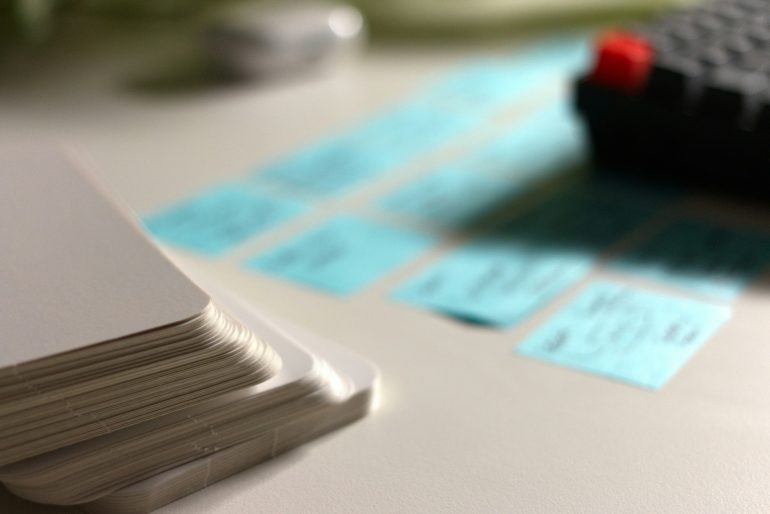
Most people think of index cards as something tucked away in an old classroom cupboard or as part of a forgotten card catalog. Yet anyone who spends time researching, writing or trying to organise a messy project eventually rediscovers how useful these small cards can be.
They are portable, cheap, flexible and, strangely enough, often more reliable than whatever notetaking app happens to be popular this month. Some people even keep a small stack within reach during reading sessions so they can catch ideas the moment they appear rather than trusting themselves to remember later.
For writers, students, researchers or anyone who gathers ideas for a living, index cards offer a slow, tactile way of thinking that most digital tools never quite capture.
Why index cards haven’t disappeared
Plenty of people now rely on digital notes, but note cards still show up in fields where deep thinking matters. Historians use them to track sources. Journalists rely on them to juggle story structures. Researchers keep them close when a project starts branching in different directions. Teachers often use them to create quick revision prompts, and speakers jot down talk outlines in a way that feels steadier than holding a phone.
If you want something simple for daily jotting or idea collecting, packs like the 5 Star Office Card Index Record Cards work well, and are easy to pick up from suppliers such as Office Stationery, where the range covers everything from simple cards to more structured filing tools.
They are sturdy enough for everyday handling and inexpensive enough that you do not overthink how often you use them.
Their simplicity is part of the charm and part of what makes them a surprisingly effective organisational tool. Some people also use different coloured cards to separate themes or projects, which makes the whole system easier to navigate at a glance.
Index cards as part of a notetaking system
A lot of people use index cards to build a notetaking system based on small, single ideas. You write one thought per card, then move them around until the structure starts to appear. This is the same idea behind the popular notecard system, smart notes, and even some approaches to building a second brain.
If you have ever tried to plan a research essay on a computer, you know how quickly you lose track of your argument. Working with cards slows you down enough to think clearly. It also helps to keep your ideas contained when you are juggling quotes, references and half-formed thoughts. A useful trick is to write questions on some cards and answers on others so you can see how your reasoning builds over time.
When your piles start to grow, a small storage box helps. Something like a Q-Connect Index Card File Box gives you a straightforward, tidy place to keep your cards grouped by topic or stage of the project. It is a quiet upgrade that keeps everything where you expect it to be. Most people end up developing small rituals around these boxes, such as reviewing yesterday’s cards before starting new work.
A practical tool for academic writing
Students and researchers use index cards for a reason. They make it easy to separate notes into small, manageable pieces and then gather them into research folders or index card file boxes when a project expands. Cards behave a bit like a very patient research assistant that holds each idea until you decide where it belongs.
If you are working with sources or shaping a long argument, larger cards such as the 5 Star Office 152 x 102 mm record cards give you more space to write quotes, summaries and page references. They are particularly useful when you need more than a sentence or two on a single card. Some writers draft entire paragraphs across multiple cards so they can shuffle sections until the argument finally feels balanced.
Index cards in creative work and everyday routines
Plenty of creative people rely on cards too. Writers use them to map out chapters. Designers sketch layouts or lists. Artists scribble ideas when they are trying to push through a creative block. Cards give each thought its own small space, which helps when a project feels overwhelming.
Some people fold index cards into their writing routines as prompts, reminders or fragments they might return to later. Others use them for visual notetaking, sketching quick diagrams or pairing colours, shapes and words until an idea starts to form. You can also keep a handful in your bag and treat them like tiny field journals, catching patterns or observations during commutes or walks.
This sort of daily card work aligns with ideas from books like The Creative Habit, where small, repeated actions help creative projects develop at a steady pace rather than in rare bursts of inspiration.
Building a knowledge base with cards
Over time, a stack of cards can become a miniature knowledge base. One idea leads to another, and eventually you can see patterns that were invisible when everything lived in one long document. Many people keep an “idea graveyard” deck for unused but interesting thoughts so their main project stack does not get too crowded.
When that happens, people often bring in card sorting tools to group related themes or identify gaps in their thinking. If you prefer to keep things tidy, a larger storage option such as a Deflecto Card Index Box makes it easier to sort finished sections into something like a loose filing system. It is not high tech, but it is surprisingly effective.
Combining digital and paper workflows
Digital tools are fast and easy to store, but they do not force decisions the way paper does. With apps, you can save everything, which often means you revisit very little. Cards encourage clearer thinking because they make you choose what to keep and what to discard.
Some people keep handwritten field notes on cards during the day, then type them up when they have time. Others do their messy thinking on cards and their final organising on a laptop. Either way works. The key is choosing the workflow that helps you make sense of your ideas.
If you use both systems, it helps to keep a small divider card noting which ideas have been digitised so the pile does not get confusing.
A flexible tool for almost any kind of thinking
Index cards do not require tutorials or logins. They simply wait for you to write something down. Whether you are planning an academic paper, shaping a creative project or organising ideas for a workshop, they offer a calm, straightforward way to hold your thoughts still long enough to understand them. Their physical limits also help; once the card is full, you have to finish the thought or start a new one, which keeps ideas from sprawling.
Their usefulness comes from their simplicity. You can write, move, combine or discard them without hesitation. That freedom often leads to better thinking, not because the cards are magic, but because they give your mind enough space to see what it is trying to say.