Most dartboard prices make sense once you know what you’re paying for. Sisal quality and wire design account for almost all of the gap between cheap boards and dear ones, so it pays to budget by cost per year rather than relying on the sticker price alone.
Why sisal decides the price
Cheap boards use paper or cork. Those fibres tear instead of closing up around the point. After a few weeks of steel-tip play, the holes stay open and the surface turns rough. You don’t get a clean stick, and the board starts to look tired fast.
Some toy-grade boards use plastic with moulded segments and tiny holes. They work for kids and very light use, but they won’t hold a steel tip at all. Points skate off or snap, so these boards are a dead end if you want to practise properly and improve your throwing.
Bristle boards use sisal, a stiff plant fibre packed tightly and cut end-on so each dart slides between the fibres rather than cutting through them. Good sisal closes back after you pull out the dart, which is why a well-made board can take thousands of throws and still look smooth. Density and fibre length separate cheap bristle from good bristle. Loose or short fibre wears fast and sheds, while tight and deep fibre lasts.
This is why sisal is non-negotiable for regular play. You can start cheaply if you throw once a month with family. If you throw every week, poor material costs more in replacements than you save at the till.
We look first at fibre density when we judge a board. Denser packing holds its shape under repeated grouping in the treble bed. Looser packing craters where good players tend to group darts. You can’t see this clearly in photos, which is why a brand’s track record counts for more than claims printed on a box.
Steel-tip and soft-tip split the market
You have to pick a side before you start comparing prices. Steel-tip darts need a sisal board, while soft-tip darts need an electronic board with holes that score for you. No single board does both jobs well.
Steel tips are sharp points that stick in fibre. Soft tips are blunt plastic points that trip sensors inside an electronic board. Use a steel tip on an electronic board and you can break the sensors and void any cover. Use a soft tip on sisal and it won’t stick properly.
This split sets your budget path. If your pub team and your mates all throw steel, compare prices within sisal boards and ignore electronic game counts. If kids or a rental space need safer play with automatic scoring, focus on electronic boards and judge the screens and build strength. Mixing those two paths usually leads to the wrong buy.
We’ve seen buyers pay for smart extras they can’t use because they started with the wrong board type. Lock in steel or soft first. Then every bit you spend goes towards features that will actually help your game.
Pool players face the same fork when they pick cues and tables, and darts is no different. The equipment behind each type of game is not interchangeable.
Wire design decides how many darts stick
Wire may look like a minor detail in photos, but it matters as soon as you start playing. Darts that hit metal don’t stick. They fall out or fly off the board. Players call these bounce-outs, and cheap wire makes them much more common.
Old round wire sits proud of the playing surface. It presents a wide target to the point, so even a good throw can clip it and drop straight to the floor.
Triangular wire was the first major fix. Its top edge is narrower, allowing points to slide off into the sisal instead of bouncing back. It cut bounce-outs considerably for its time. Most decent home boards now use triangular wire at a minimum.
Blade wire goes further, using thin steel fins sunk into the board so there is almost no exposed metal for a point to hit. Grouping in the trebles is also cleaner because darts can pack tightly without deflecting off thick wire. You pay more for this design. You also throw with fewer interruptions.
Winmau built its name on this idea with the Blade series. Unicorn answered with its own thin-wire Eclipse Pro. Both sit near the top of sisal board pricing for good reason.
Cheap boards weld round wire and leave raised blobs where the wires cross. Those blobs can cause wild deflections. Better boards laser-cut and sink the grid so the joints sit flush with the playing surface.
We test bounce-outs in our room by throwing sets at treble twenty. It quickly tells you whether the wire is honest. A board that spits out tight groups will annoy you for years, so it is worth paying to avoid that problem.
How to budget by cost per year
Sticker price can be misleading. A cheap board that needs replacing twice a year is not really cheap, while a dear board that stays playable for years with basic care can offer better value. We budget by cost per year, and you should too.
When you compare dartboards across a specialist store that lists sisal grade and wire type, the value tiers sort themselves out quickly. You can see the trade-offs in plain terms rather than guessing from the price alone.
Entry boards cover occasional family games. Paper tops and basic bristle sit in this tier. They are fine if the darts come out during holidays and stay in a drawer afterwards. Don’t expect them to survive regular steel-tip practice.
Home-play boards are the sweet spot for most of us. They pair decent sisal with thin wire that keeps bounce-outs low. They cost more at the till, but they hold up under weekly play and feel fair when you start grouping darts.
Tournament-grade sisal suits players who throw most days and keep score. The density is tighter and the wire is at its finest. Number rings rotate to spread wear across the board. You pay top money, but you get a board that stays true while your throwing improves.
A throwaway board replaced twice a year, along with the lost practice time, costs more than one solid board kept for years with regular rotation.
Small details that stretch board life
Two small specifications can tell you whether a maker has cut corners. Look for them before you buy. They may add a little to the initial price, but they add much more to the board’s usable life.
Staples around the bull were once normal. Points hit them and bounced out. A staple-free bull uses thin dividers or glue to hold the wires in place, leaving no metal lumps in the scoring zone. It plays more fairly and also saves dart points from unnecessary damage.
A rotatable number ring lets you move the top segment to the next zone. Treble twenty wears fastest because we all aim there. Turn the ring now and then to spread wear around the board. Boards with fixed rings can’t do this, so one heavily used patch dies early.
Good boards also use firm backing that keeps the sisal flat and takes a bracket without wobbling. A stable mount keeps the face square and stops repeated dart impacts from loosening the board over time.
Check these details in product listings and in store. If a seller hides close-up photos of the wire or won’t say whether the bull has staples, treat that lack of information as an answer.
Why tournament labels add money
Tournament approval adds money for a reason. Labs test density and bounce-out rates across the board’s face, and every segment must play the same way. Maintaining that level of control costs more during manufacturing.
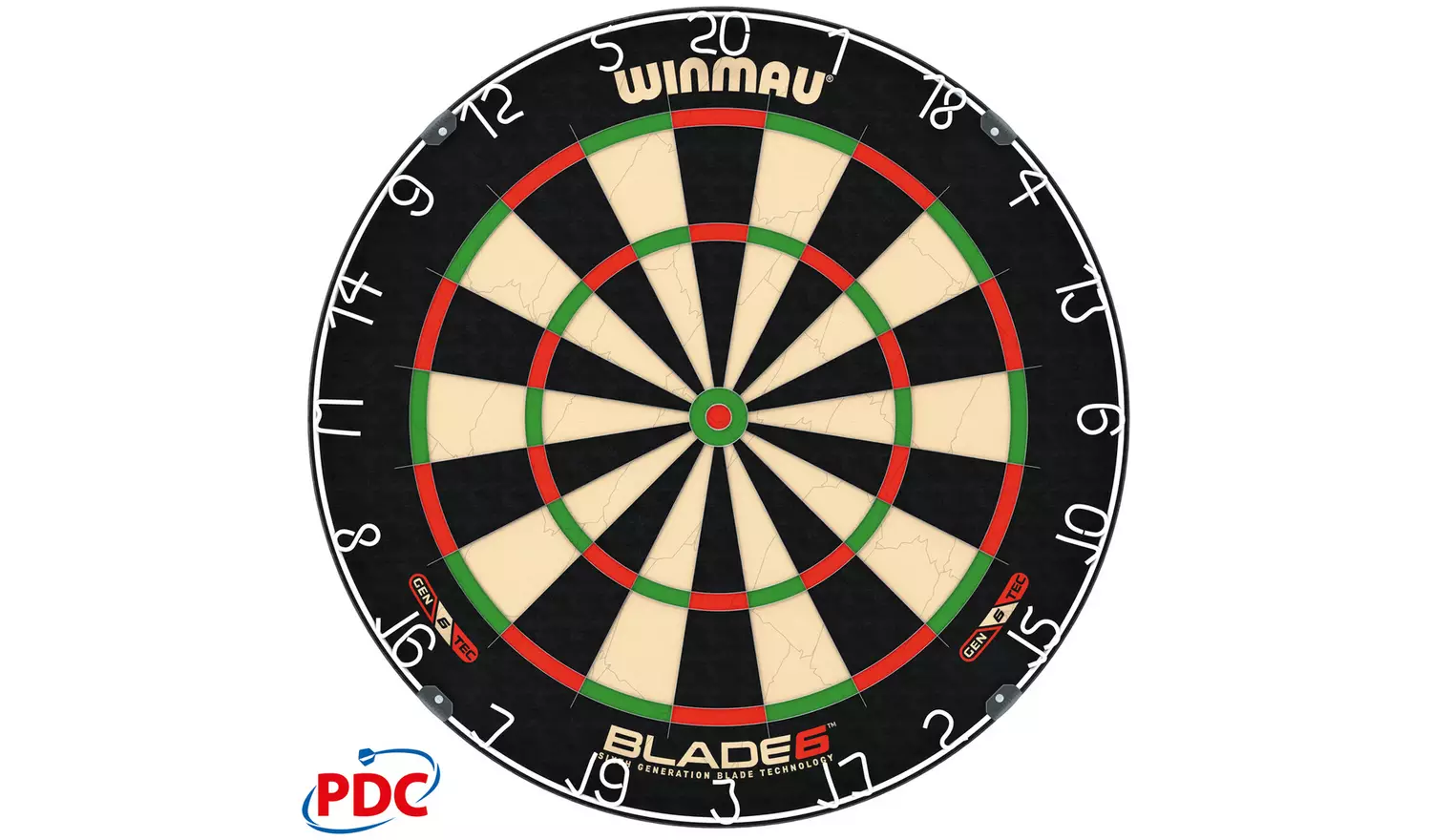
Winmau’s Blade 6 is the official match board used at the PDC World Darts Championship. That status sets the top price tier. You pay for tight tolerances as well as the right to call it the board the professionals throw on television.
Casual players don’t need that tournament tag. A solid mid-range bristle board with thin wire plays closely enough for home leagues. You can save the difference and spend it on a surround and spare darts. Serious players who practise daily are more likely to feel the steadier bed and notice fewer kick-outs.
We split buyers this way. Buy approval if you compete or want the professional feel. Skip it if you mainly play for fun after dinner. Both choices are sensible when they match how often and how seriously you play.
Electronic boards play by different rules
Electronic boards are plastic scoring machines rather than cheaper versions of sisal boards. You throw soft tips, the sensors record each hit and the screens display the score.
Price here tracks the electronics rather than the fibre. You pay for display sharpness and build strength. A larger game count adds a little to the price, while app links add more for players who want online play.
Toy-grade models suit kids with light throws, while sturdier home models can take nightly games if you use the correct tips and keep spare points nearby. Match the board to who will be throwing and how hard they throw instead of chasing the longest game list.
Don’t cross the streams. Steel tips wreck sensor holes and split the segment dividers. Most makers void cover if you use them, so keep steel darts well away from plastic electronic boards.
If safety and automatic scoring top your list, an electronic board makes sense. If you want to join a steel-tip league or sharpen your averages, buy sisal. Pick the path that fits your room and the way you expect to play.
Add up the full setup before you buy
Compare complete boxes, not only the boards. One box may hold a bare board, while the next includes a board, surround, cabinet, bracket and darts. That second box can offer better value even when the ticket price looks higher.
Surrounds save walls from stray darts, while cabinets hide the board and hold scoreboards. Bought separately, these extras add real money to a setup. In a bundle, they often cost less than piecing the parts together later. Target earns shelf space here with surrounds and cabinets that pair cleanly with its boards.
Rotation gives you extra board life for free. Turn the number ring often so wear moves around the face. Keep the board dry and away from heat, and pull darts out straight to protect the fibre. These simple habits keep a mid-range board playable for far longer than most buyers expect.
A dartboard also fits a games room well. It takes up wall space beside a pool or billiards table, and players can throw between frames. Guests stay involved even when the table is busy. The outlay is modest next to felt and cues, yet the board helps round out the night.
Buy where proper support is available. Local stock means fast swaps if a board arrives warped. Clear freight terms and an honest warranty are better than chasing a distant seller for help. Cheap fakes copy big names and use loose sisal that crumbles, so stick with shops that show real photos and answer specific questions.
Buy fibre and wire first. Match the board to steel or soft tips. Let cost per year guide your choice, and the right price becomes much easier to see.